Asymmetric Eyes Correction: How to Fix Ptosis and Achieve Perfect Balance
2026-02-06
Noonopi Plastic Surgery · Dr. Nk Park
Asymmetric Eyes Correction: How to Fix Ptosis and Achieve Perfect Balance
Asymmetric eyes—commonly referred to as uneven eyes or droopy eyes—are more than just a cosmetic concern. Whether it’s a subtle 1mm difference or a severe functional impairment, eyelid asymmetry can cast a shadow on your confidence and daily life.
At Noonopi Clinic, led by Dr. Nk Park, we specialize in the delicate art of ptosis surgery to restore both symmetry and function. In this guide, we explore the causes of eye asymmetry through three distinct cases and explain why precision is the "golden rule" in our operating room.
Contents
- 01Understanding the Root Cause: Is it Ptosis?
- 02Case 1: Congenital Ptosis – Restoring Vision from Birth
- 03Case 2: Severe Eyelid Asymmetry – Function Meets Aesthetics
- 04Case 3: Moderate Ptosis in Men – The "Golden Time" for Perfection
- 05The Noonopi Clinic Protocol for Asymmetric Eyes
- 06Conclusion: Don't Let Asymmetry Hold You Back
Understanding the Root Cause: Is it Ptosis?
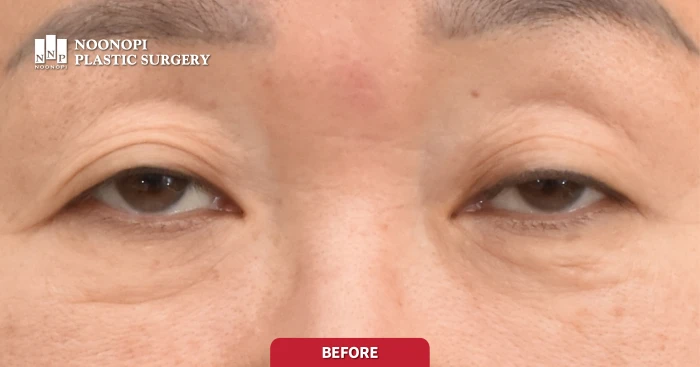
Many people mistake sleepy eyes for simple fatigue. However, the true culprit is often ptosis (blepharoptosis), a condition where the levator muscle (the muscle responsible for opening the eyes) is weak or detached.
When one eye is more affected than the other, it results in visible asymmetry. To compensate, patients often subconsciously lift their eyebrows, leading to deep forehead wrinkles and further unevenness in brow height.
Case 1: Congenital Ptosis – Restoring Vision from Birth
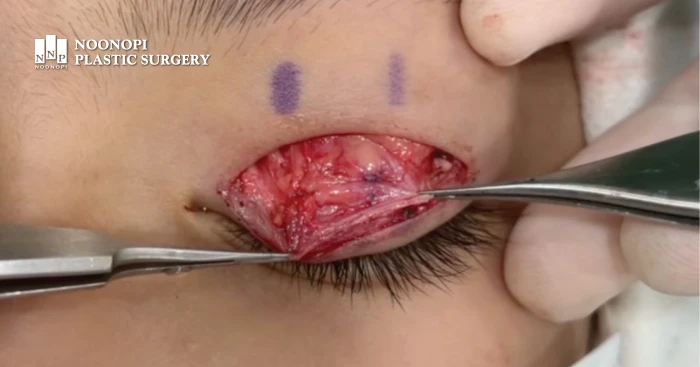
Congenital ptosis is a condition present from birth where the levator muscle fails to develop properly, often showing "fatty degeneration" or fibrous changes.
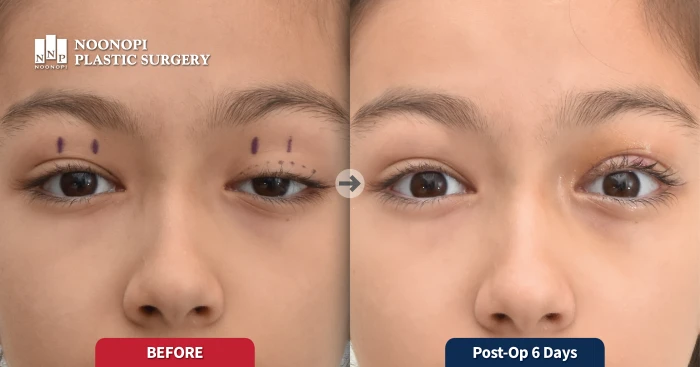
- The Case: A 12-year-old girl traveled to Korea to fix a severe left-eye ptosis she had since birth.
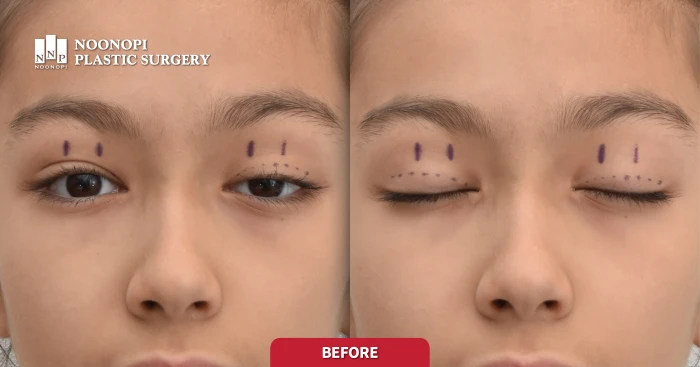
- The Approach: During surgery, Dr. Park identified that her LPTL (Lower-Positioned Transverse Ligament) was restricting eye movement.
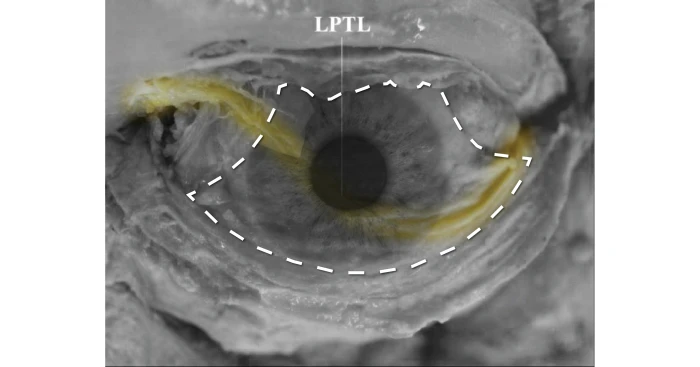
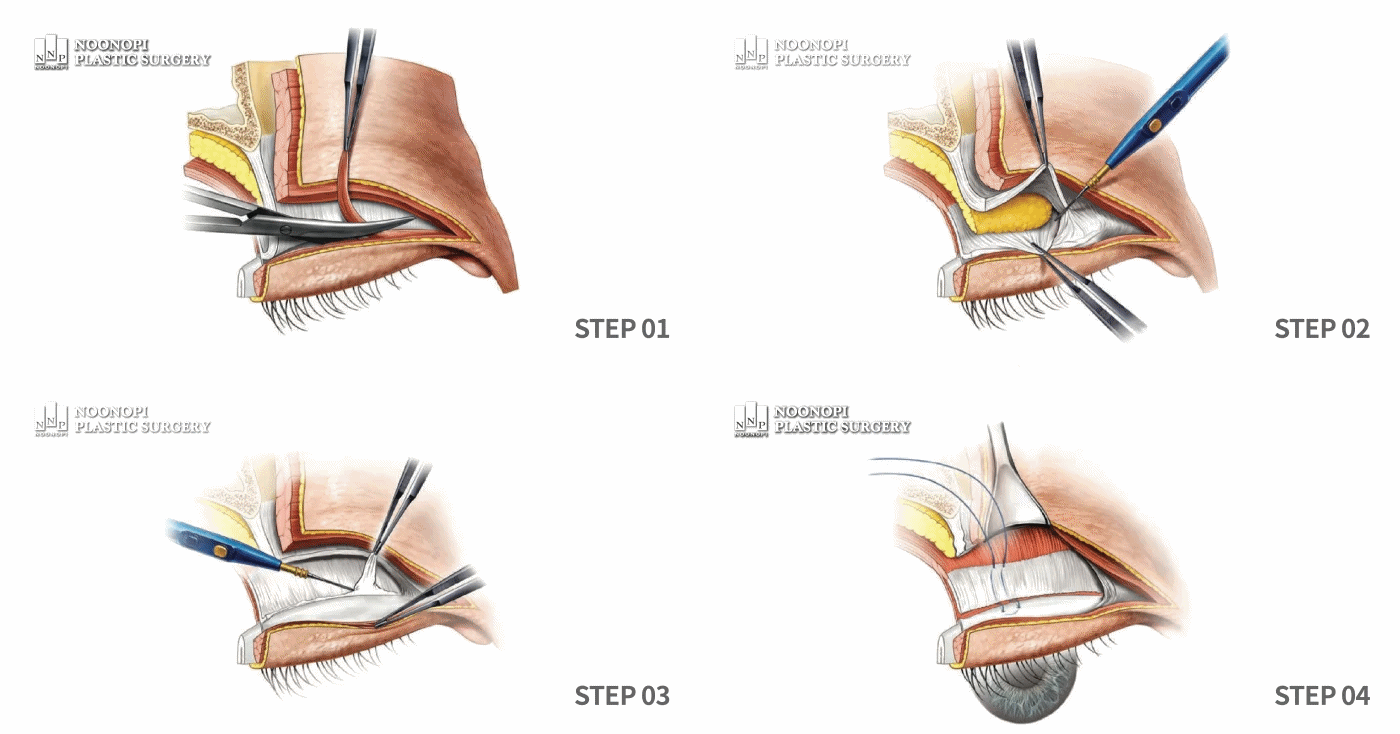
- The Result: By releasing the ligament and performing a Levator Advancement, her eyes became symmetrical for the first time in 12 years. This case proves that even long-standing congenital conditions can be corrected with the right anatomical understanding.
Case 2: Severe Eyelid Asymmetry – Function Meets Aesthetics
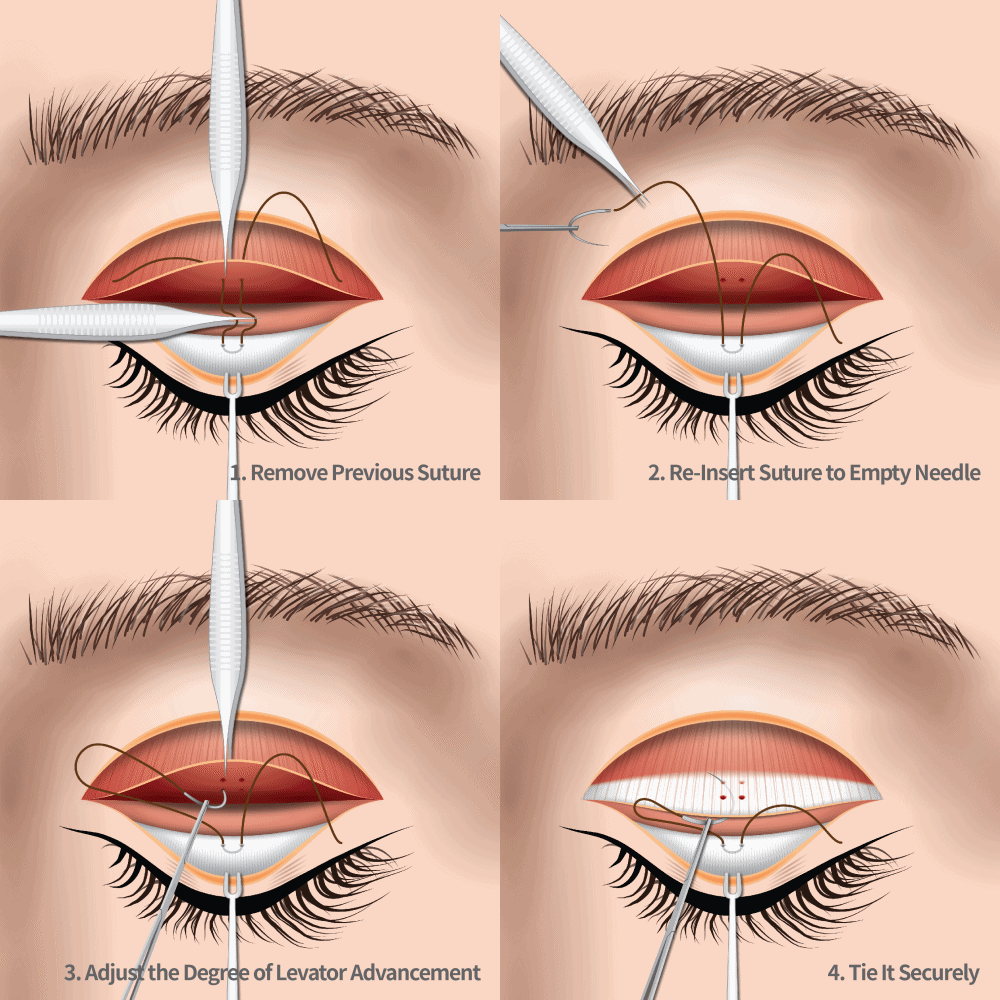
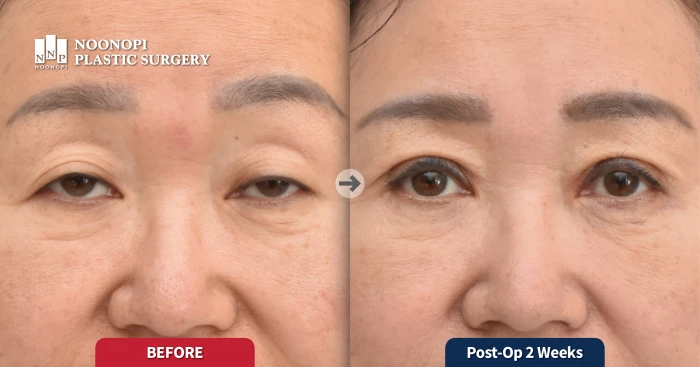
As we age, we may develop involutional ptosis, where the muscle connection loosens over time.
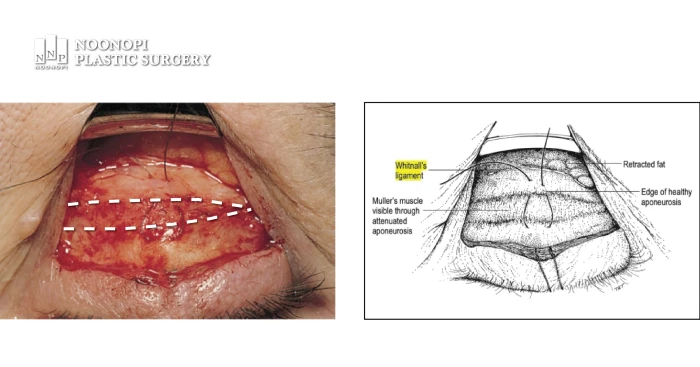
- The Case: A woman in her 60s from California presented with a drastic difference in muscle strength (Levator Function Test: 14mm vs. 8mm).
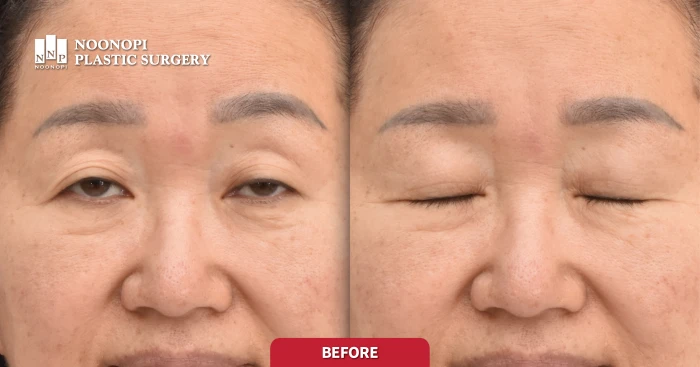
- The Challenge: Severe asymmetry is notoriously difficult because "over-correction" or "under-correction" is a high risk.
- The Noonopi Difference: We utilize a unique “Fine-tuning control” for levator advancement to ensure the perfect amount of lift.
Case 3: Moderate Ptosis in Men – The "Golden Time" for Perfection
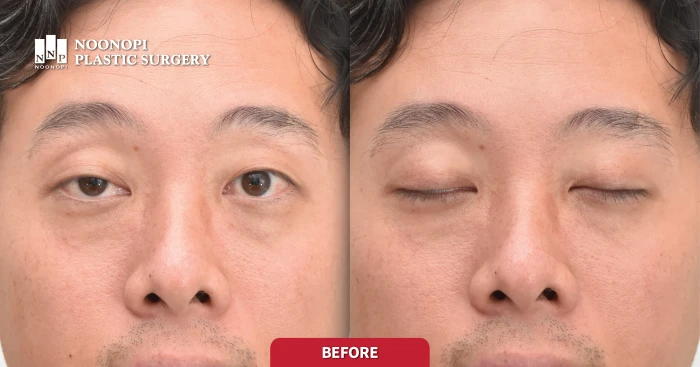
For men, the goal is often a natural look without a "greasy" or deep double eyelid line.
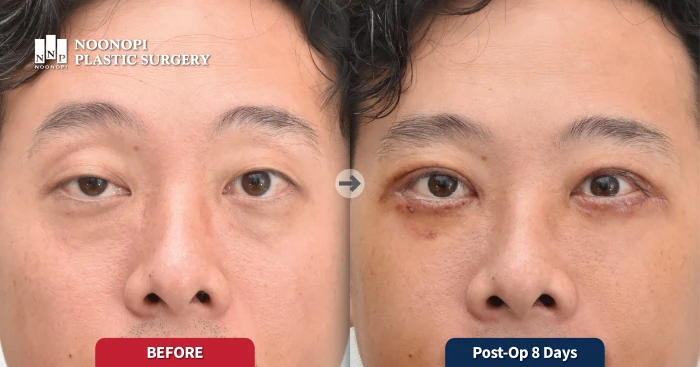
- The Case: A man in his 30s struggled with heavy forehead tension due to uneven sleepy eyes.
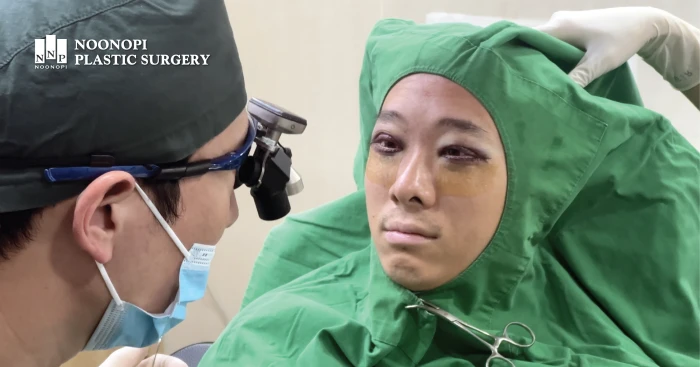
- The Noonopi Difference: We utilize a unique "Sitting-Up Check." By having the patient sit up during surgery to check symmetry in real-time, we ensure the 0.5mm precision that standard lying-down procedures miss.
The Noonopi Clinic Protocol for Asymmetric Eyes
To ensure the best outcome for eyelid asymmetry, we follow a rigorous diagnostic and surgical protocol:
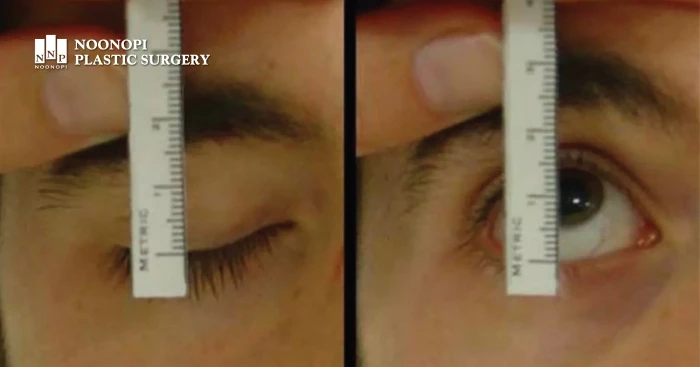
1. Levator Function Test (Berke’s Method): We objectively measure the strength of your eyelid muscles to determine the surgical technique.
2. Hering’s Law Evaluation: We check if correcting one eye will cause the other to droop—a common pitfall in ptosis surgery.
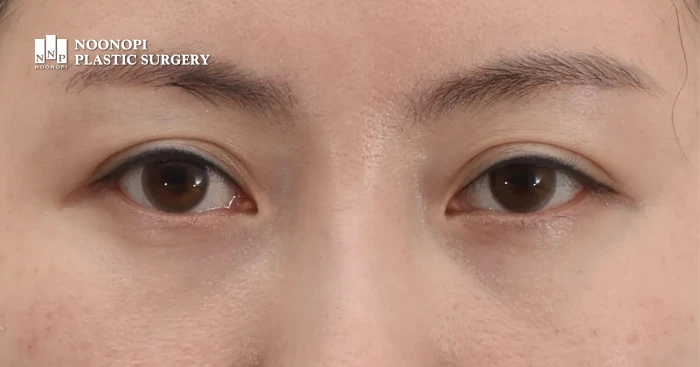
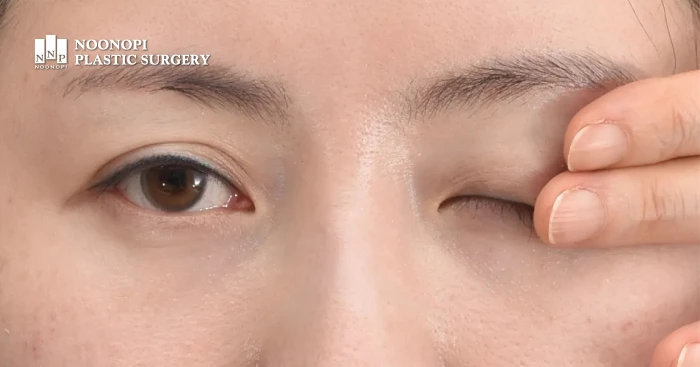
3. Customized Design: We calculate the ideal pupil exposure (usually 85-90%) based on your facial structure.
4. Surgical Tenacity: We do not compromise. If the symmetry isn't perfect in the OR, we adjust until it is.
[Video Link: Real patient reviews and surgical process at Noonopi Clinic]
Conclusion: Don't Let Asymmetry Hold You Back
"Everyone has facial asymmetry. But if it becomes a shadow on your heart, medical science can help erase it." — Dr. Nk Park
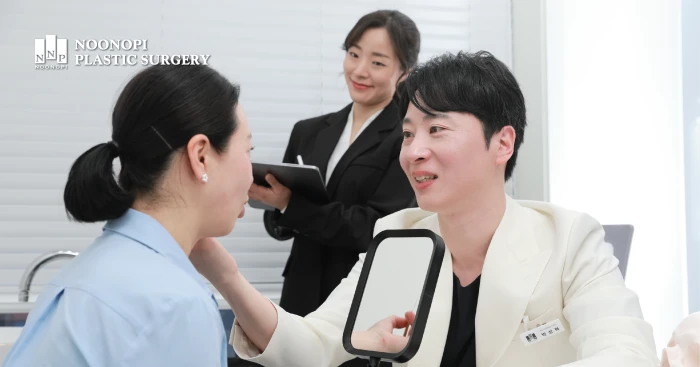
Whether you are dealing with congenital ptosis or age-related droopy eyes, the key to success lies in a surgeon’s obsession with detail. At Noonopi Clinic, we aim your expectations with uncompromising delicacy.
FAQ
Frequently Asked Questions
QCan severe eye asymmetry be fixed with surgery?
Yes, by measuring muscle strength via Berke’s Method and performing precise fine-tuning of the levator muscle to restore balance.
QWhy is the "Sitting-up Check" important during ptosis surgery?
It accounts for gravity in real-time, allowing 0.5mm adjustments to ensure perfect symmetry that lying-down procedures miss.
Plastic Surgery Expertise You Can Trust
Discover the best version of yourself with Noonopi Clinic. Get a personalized evaluation and safe, natural-looking results from a premier board-certified plastic surgeon in Korea.

Individual results may vary.
All medical procedures carry potential risks, side effects, and complications.
Please consult a qualified medical professional.

- No related posts.