Caucasian Plastic Surgery in Korea: Do Korean Surgeons Understand Western Aesthetics?
2026-07-20
Hello, I am Dr. Nk Park, a board-certified plastic surgeon and director of Noonopi Clinic.
Since opening our clinic in 2024, we have welcomed a rapidly growing number of international patients. It is incredibly encouraging to see this influx driven entirely by organic search and word-of-mouth recommendations from satisfied patients, without relying on any third-party agencies.
Many Western patients considering plastic surgery in Korea share a common anxiety:
“Will an Korean surgeon understand my Caucasian facial features?”
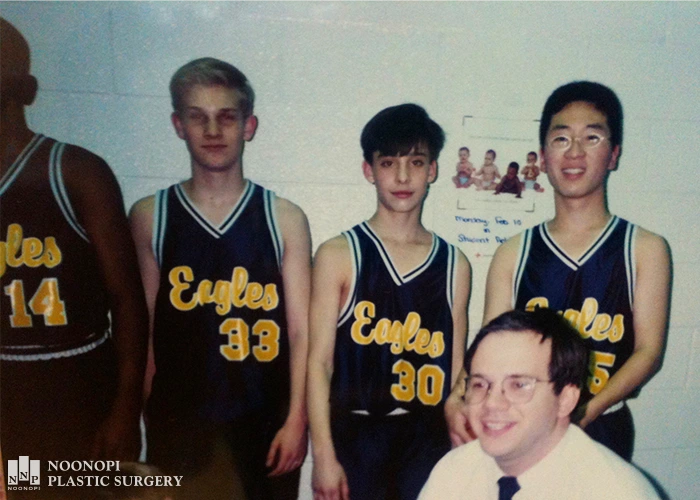
My deep understanding of Western culture began during my middle school years in Buffalo, New York, and matured into a strong clinical foundation in Western anatomy and aesthetics during my time as a medical student at Mount Sinai School of Medicine. Drawing from this unique background, I want to address your concerns directly by exploring the distinct aesthetic visions of the East and the West.
Contents
- 011. The Position and Shape of the Eyebrows
- 022. Scleral Show: The White Area of the Eyes
- 033. Jawline and Malar (Cheekbone) Contouring
- 044. The Approach to Facial Aging
- 055. It Is Not Just Differences: Common Ground in Modern Surgery
- 066. Conclusion: A Global Approach to True Beauty
- FAQFrequently Asked Questions
💡 Quick Answer: Treating Caucasian vs. Asian Faces
- The Concern: Many Western patients worry that getting Korean plastic surgery will result in a standardized "factory Asian look."
- Anatomy Differences: Caucasians and Asians have fundamentally different bone structures, skin laxity, and fat distribution.
- Aesthetic Differences: While Asian patients often prefer slim "V-lines" and parallel brows, Western patients generally desire defined jawlines, arched brows, and natural volume on their cheeks.
- The Solution: A successful outcome requires a surgeon with deep anatomical knowledge and cross-cultural clinical experience to tailor the approach, rather than applying a one-size-fits-all Asian template to a Western face.
Asian vs Caucasian Plastic Surgery Differences
| Focus | Asian Patients | Caucasian Patients |
|---|---|---|
| Eyebrows | Often prefer a slightly wider brow-to-eye distance and straighter, parallel brows. | Often prefer a narrower brow-to-eye distance with a slightly arched brow shape. |
| Eye Shape | Often seek larger, more open-looking eyes through lateral or lowering epicanthoplasty. | Tend to avoid scleral show and may prefer a supported almond-shaped lower lid. |
| Facial Contour | Historically, a smaller and slimmer V-line face has been a common aesthetic goal. | Defined jawlines and malar cheekbone volume are often valued more than simple slimming. |
| Facial Aging | Facelift timing is often later, and simple eyebag repositioning may be sufficient in selected cases. | Earlier skin laxity, neck sagging, and hollowed eyes may require a different rejuvenation plan. |
01
The Position and Shape of the Eyebrows
Perhaps the most prominent cultural difference in facial aesthetics lies in the eyebrows.
Brow-to-Eye Distance
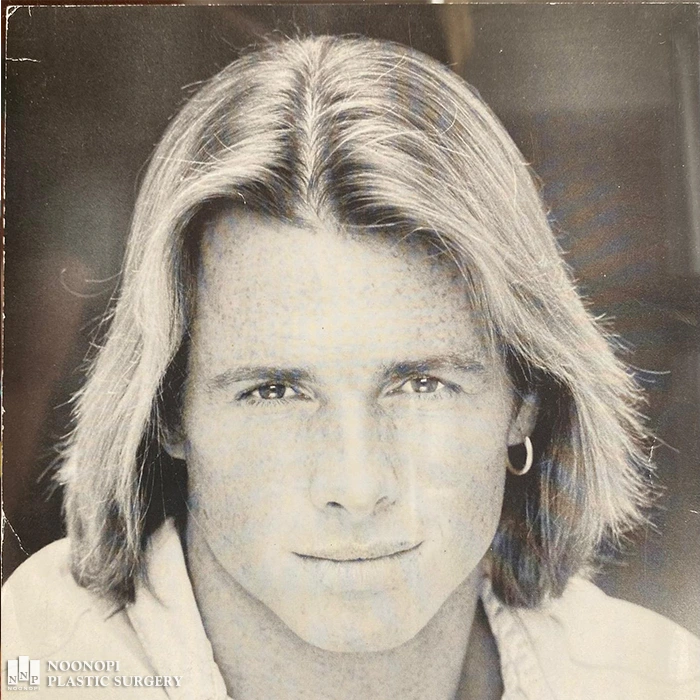
In Western beauty standards, a narrower distance between the eyebrow and the eye is often preferred, creating a deep-set, intense look.
Conversely, Asian aesthetics favor a slightly wider, more open distance.
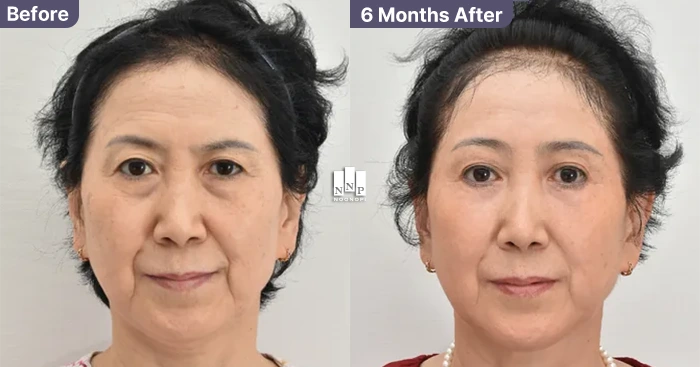
This anatomical and aesthetic gap explains why an endoscopic brow lift—a universally satisfying procedure for Asians—is not always the best solution for Caucasians.
Arched vs. Parallel Brows
Asian patients typically prefer straight, parallel eyebrows for a softer, youthful appearance.
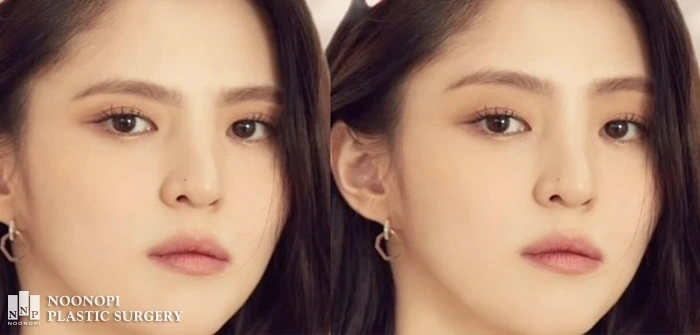
In contrast, Caucasian patients often desire a slightly arched brow.
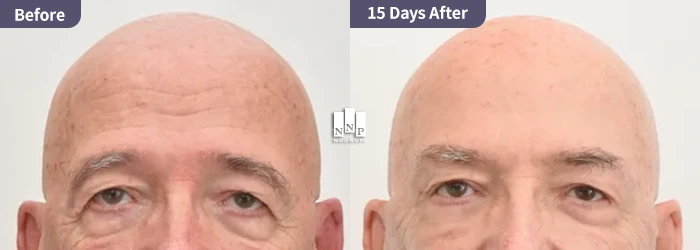
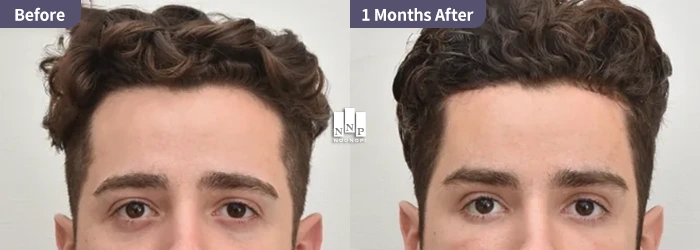
This preference has popularized procedures like the fox eye lift in Western culture, aiming for a lifted, exotic outer corner.
02
Scleral Show: The White Area of the Eyes
When it comes to eye enlargement, the goals diverge significantly.
Asian patients frequently undergo lateral epicanthoplasty or lowering epicanthoplasty to make the eyes appear as large as possible.
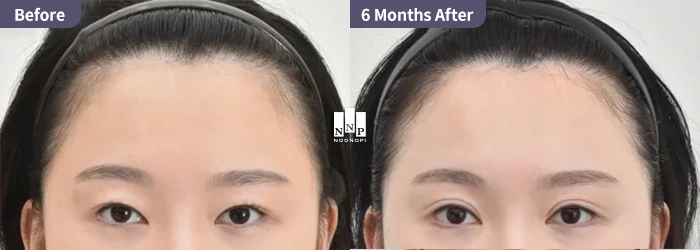
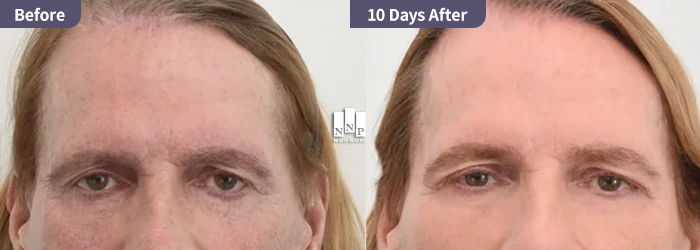
On the other hand, Western patients tend to strongly dislike "scleral show" (when the white part of the eye is visible below the iris). Instead of lowering the eyelid, they often seek tightening procedures (like canthopexy) to create a more almond-shaped, highly supported lower lid.
03
Jawline and Malar (Cheekbone) Contouring
Asian patients historically show a strong preference for smaller, slimmer faces. It is no coincidence that aggressive bone-cutting surgeries to achieve a slim "V-line" became a massive trend in Asia.
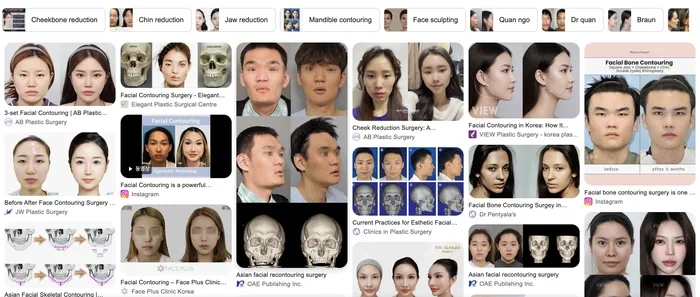
Westerners possess inherently 3D facial structures with high noses and deep-set eyes. They rarely want to simply "slim down" the jaw. Instead, they prefer a sharply defined jawline and prominent malar (cheekbone) volume.
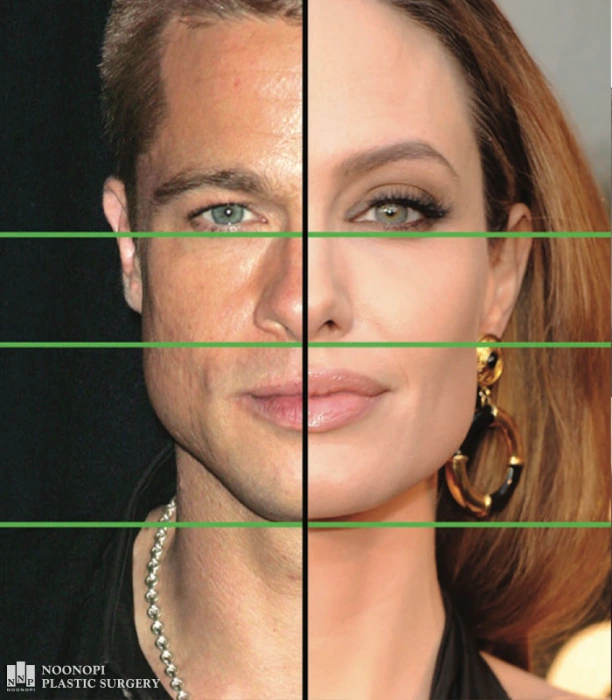
Therefore, when performing facial fat grafting on a Caucasian patient, it is common to touch up the jawline and malar areas to achieve sophisticated volume augmentation rather than mere reduction.
04
The Approach to Facial Aging
As a surgeon specializing in comprehensive facial rejuvenation and anti-aging, the most striking difference I observe between East and West is skin laxity.
Skin Sagging and Neck Laxity
For Asian patients, undergoing a facelift in their 50s is considered quite "early." For Caucasians, however, skin sagging becomes notably prominent much sooner—often in their late 30s or early 40s. Neck skin redundancy is particularly pronounced in Westerners. The term "turkey neck," while widely discussed in Western anti-aging communities, is actually a relatively uncommon phenomenon among Asians.
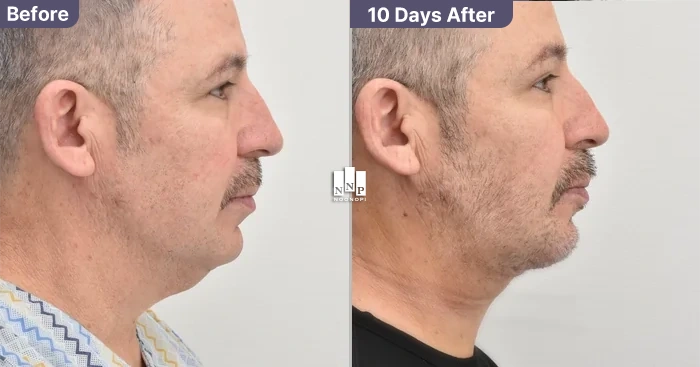
This structural difference drastically alters the timing and technique required for a Caucasian facelift in Korea.
Hollowed Eyes
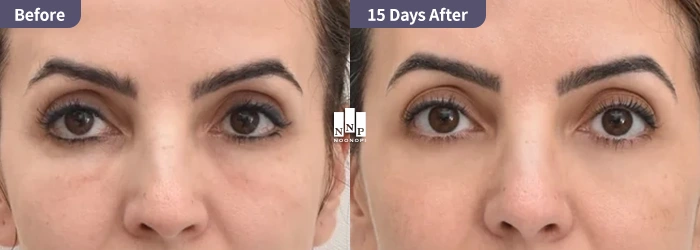
Asian patients naturally possess more periocular fat. Westerners have structurally less fat around the eyes, and this hollowness exacerbates rapidly with age, often beginning in the mid-30s.
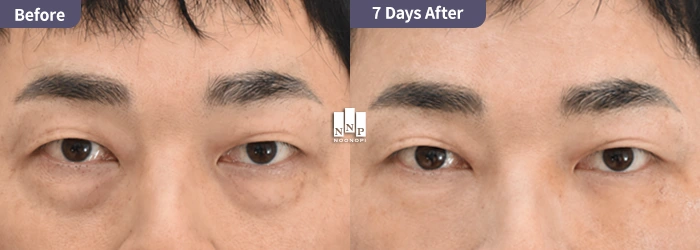
While an Asian patient might be fully satisfied with a simple eyebags repositioning, a Western patient frequently requires a scarless lower blepharoplasty combined with a precision fat graft to restore lost volume.
05
It Is Not Just Differences: Common Ground in Modern Surgery
Ten years ago, Asian patients often sought somewhat dramatic, exaggerated changes. It is true that this hyper-artificial look was sometimes mocked in Western media.
However, the current trend in top-tier Gangnam plastic surgery has shifted decisively toward natural, harmonious results.
While some extreme marketing from China still showcases heavy, artificial modifications, these "fake" viral videos are driven by fierce marketing competition rather than actual cultural preferences. Today, whether you are from New York or Seoul, the ultimate goal of premium plastic surgery is the same: to look like the best, most refreshed version of yourself.
06
Conclusion: A Global Approach to True Beauty
At Noonopi Clinic, we do not simply apply a "Korean mold" to every face. Having successfully treated patients from a wide array of ethnic and cultural backgrounds—supported by my clinical experience in New York—I have learned that true surgical excellence lies in respecting each individual's unique anatomical heritage.
We are incredibly proud of the trust our diverse international patients place in us every day. If you are considering your plastic surgery journey in Korea but are worried about losing your unique Western features, please rest assured. We are here to listen, understand your specific aesthetic goals, and safely guide you toward the most beautiful, natural version of yourself.
FAQ
Frequently Asked Questions
QWill getting plastic surgery in Korea result in a standardized Asian look for Caucasians?
No. At Noonopi Clinic, Dr. Nk Park customizes surgical techniques based on distinct Caucasian anatomy, preserving defined jawlines and arched brows for natural results.
QWhy do Western patients experience earlier facial aging than Asian patients?
Caucasians typically have thinner skin, less periocular fat, and earlier skin laxity, often requiring facelifts or lower blepharoplasty in their late 30s or 40s.
Plastic Surgery Expertise You Can Trust
Discover the best version of yourself with Noonopi Clinic. Get a personalized evaluation and safe, natural-looking results from a premier board-certified plastic surgeon in Korea.