Double Chin Liposuction vs. Neck Lift: Why Liposuction Fails & Revision Insights (Cost & Recovery Guide)
2026-11-20
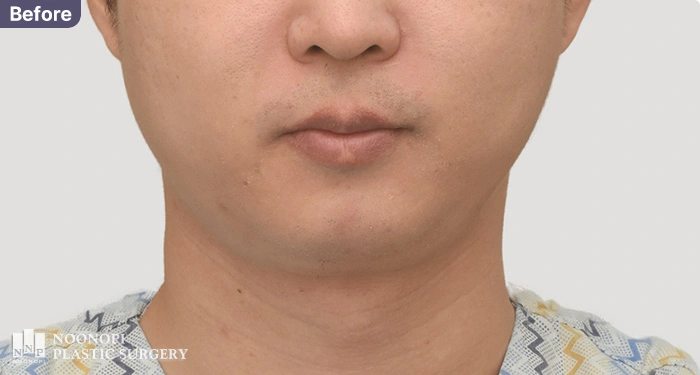
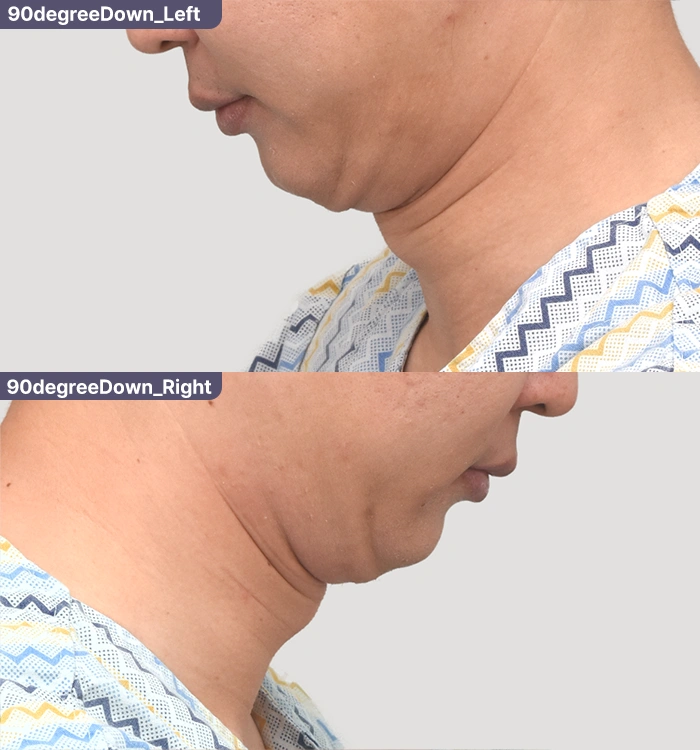
The photo above shows a patient who visited our clinic for revision surgery after previously undergoing double chin liposuction and neck muscle tightening at another clinic. Despite it being only one year since their initial procedure, his jawline remained blunt and lacked definition.
Even though they already had fat removed and muscles tightened, why did this disappointing result occur? Through this patient’s revision case, let me explain the crucial differences between double chin removal and a deep neck lift, the core principles of revision neck surgery, and a complete breakdown of recovery times and costs.
💡 Key Summary (3-Point Quick Takeaway)
• The Limitation: Double chin liposuction only removes superficial fat above the muscle, making it ineffective if you have loose skin, deep subplatysmal fat, or enlarged salivary glands.
• The Neck Lift Advantage: A surgical neck lift addresses deep fat beneath the muscle, reduces enlarged submandibular glands, and tightens the platysma muscle for structural correction.
• Revision Key: Success depends not on how much salivary gland is removed, but on how much is harmoniously left behind—alongside proper muscle tightening that holds even when looking down.
Why Disappoint After Chin Liposuction
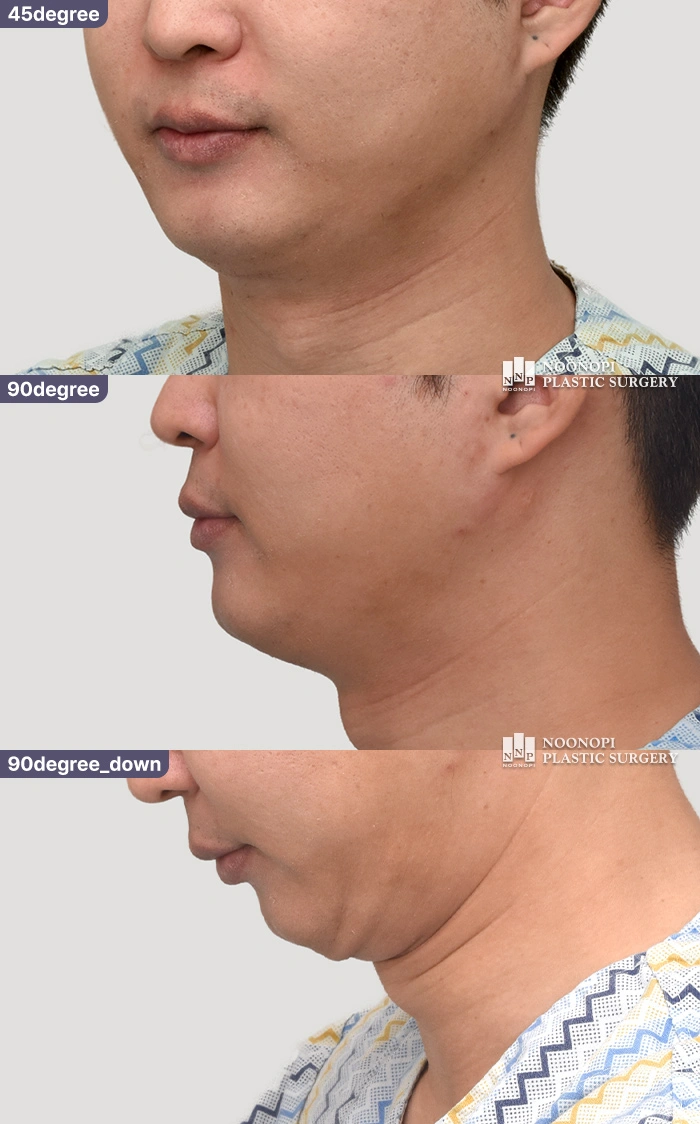
The neck is composed of distinct anatomical layers from the outside in: skin, subcutaneous fat, muscle (platysma), and deep fat alongside the submandibular glands.
Simple liposuction often fails to create a sharp jawline because it cannot treat each of these structural layers individually. For the skin to retract cleanly after fat removal alone, two conditions must be met:
- The patient must be relatively young (typically under 30) with healthy, resilient skin collagen.
- Skin laxity must be mild enough for the tissue to contract reversibly on its own.
However, most people who struggle with a double chin already have stretched skin caused by excess fat, or reduced skin elasticity due to various factors—much like the case shown below.
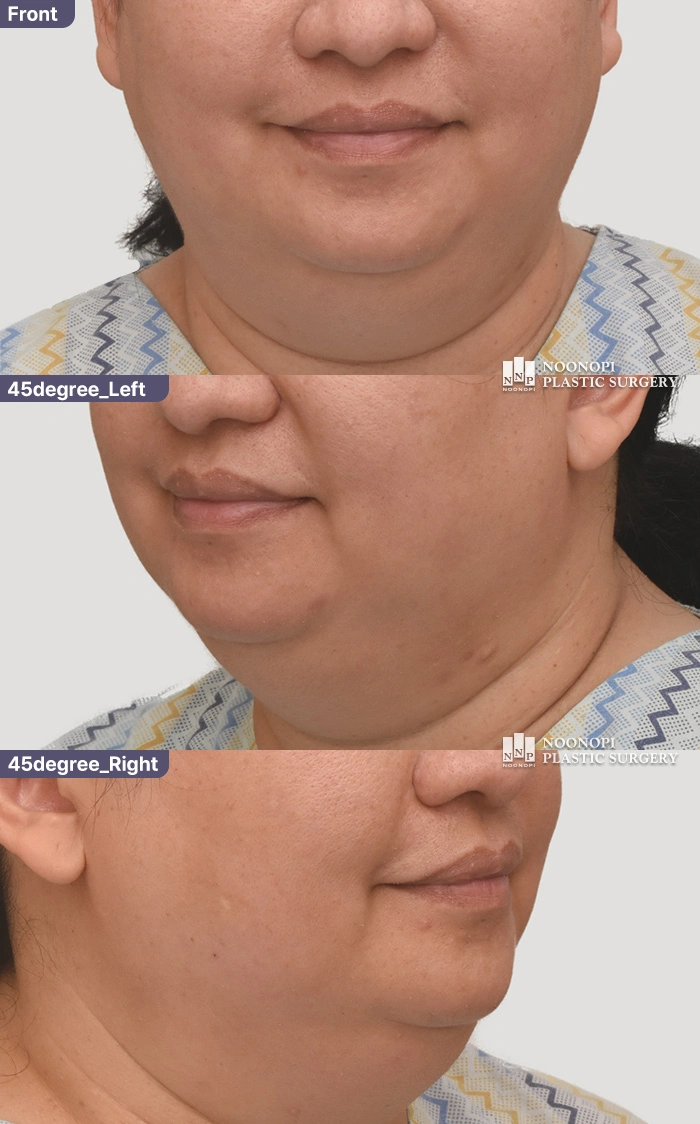
What happens if liposuction is performed on a neck with substantial neck volume and significantly stretched skin, like the case shown above? While removing superficial fat reduces some bulk, the stretched skin and deeper structural bulges remain untouched, making a dramatic jaw line transformation unlikely.
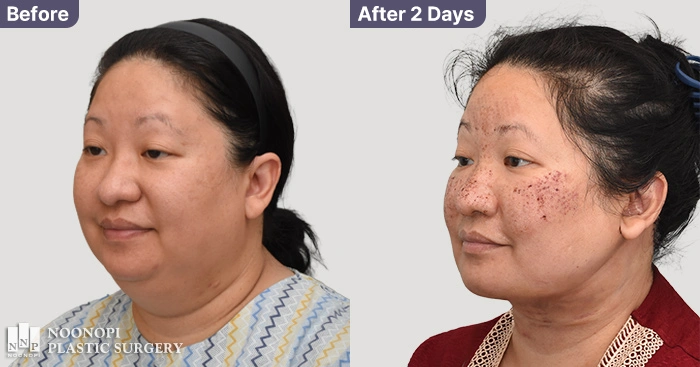
But at Noonopi Plastic Surgery, we never push major surgery on every patient. Instead, we transparently explain the pros, cons, and trade-offs of each procedure, empowering you to choose whether you prefer a comprehensive surgical correction with a longer recovery or a more conservative approach with minimal downtime.

Double Chin Liposuction vs. Neck Lift: What Is the Difference?

Hearing the term "surgical lifting" often triggers common misconceptions—such as assuming it is only for older patients or that it is overly invasive. Rather than focusing on the label, it is essential to examine what actually happens beneath the skin during each procedure.
1) Surgical Technique and Treatment Scope
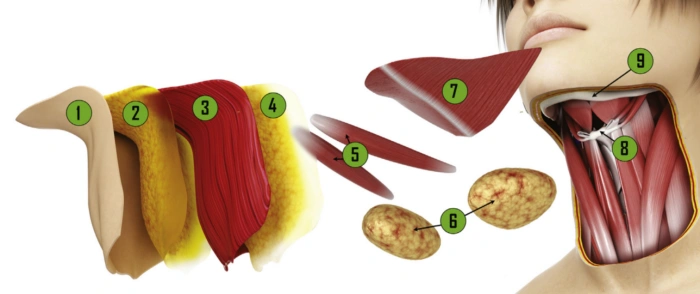
The most fundamental difference between the two procedures lies in the anatomical depth and scope of treatment.
Category | Double Chin Fat Removal | Deep Neck Lift |
Treatment Depth & Scope | Removes only superficial fat above the platysma muscle | Treats deep fat beneath the muscle, reduces submandibular glands, and tightens platysma muscles simultaneously |
Key Advantages | Performed through tiny incisions; fast recovery | Layer-by-layer anatomical customization addressing root causes |
Limitations | Minimal effect when skin laxity, gland hypertrophy, or muscle laxity is present | Requires longer recovery time and advanced surgical expertise |
Regardless of surgical skill, liposuction has inherent technical limitations that lead to wide variations in patient outcomes. While a select few achieve dramatic results, many experience minimal improvement or surface irregularities. Conversely, a surgical neck lift directly targets each anatomical layer—skin, fat, muscle, and glands—under direct visualization, yielding far more consistent and predictable results.
2) Recovery Timeline, Aftercare, and Cost Comparison
Here is a side-by-side comparison of the recovery timelines, precautions, and average costs to help guide your decision.
Category | Double Chin Fat Removal | Deep Neck Lift |
Return to Work | 1–3 days (mild residual swelling may persist) | 5–12 days (easily concealed with turtlenecks or scarves) |
Surgical Difficulty | Relatively low (performable by entry-level surgeons) | Very high (requires deep mastery of neck nerves, vessels, and gland anatomy) |
Post-Op Precautions | Limited precision in hemostasis due to non-incisional nature | 6 weeks of diet modification, posture awareness, and compression garment wear |
Average Cost (KRW) | Approx. 1,000,000 – 3,000,000 KRW | Starting from 6,000,000 KRW (varies by surgical scope and surgeon expertise) |
3 Essential Keys to a Successful Neck Surgery
Let us return to the revision patient introduced at the beginning of this post.
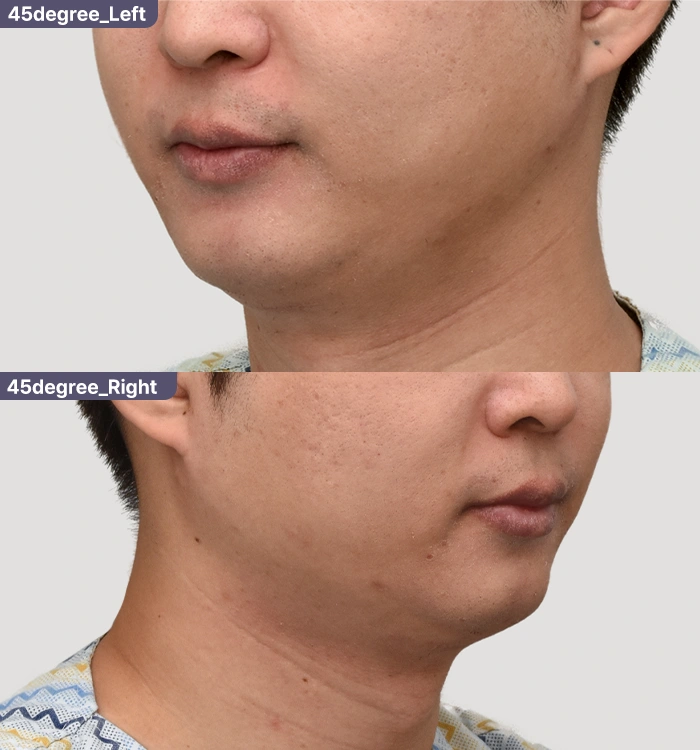
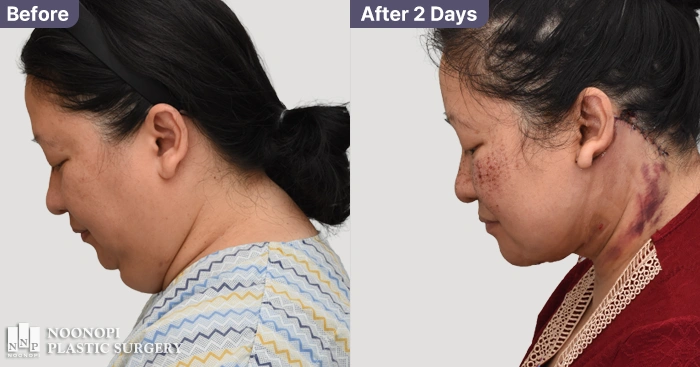
This patient had previously undergone both liposuction and submandibular gland reduction through a submental incision—meaning they had technically already received a surgical neck lift. Why, then, did they visit Noonopi Plastic Surgery for a revision just one year later?
① Submandibular Gland Reduction: Remains Matters More Than How Much Is Removed
When evaluating salivary gland reduction, the total volume excised is not the true measure of success. What truly matters is how much gland tissue remains harmoniously in place.
Some surgeons take pride in removing a thumb-sized portion of the gland, yet just as eyes, noses, and ears vary in size from person to person, the ideal residual gland volume differs for every patient.
In this patient's case, although a significant amount of gland had been removed previously, the lateral (outer) portion of the submandibular gland—which is difficult to visualize without proper surgical exposure—was left behind, continuing to obstruct a clean jawline.
② Platysmaplasty (Neck Muscle Tightening): Proper Anatomical Placement and Tension
If a bulge persists under the chin when tilting the head down despite fat and gland removal, the position and tension of the muscle tightening must be re-evaluated. A downward-gaze photo clearly reveals whether the platysma muscle was anchored with sufficient tension to hug the bone or merely tightened superficially.
③ Excess Skin: Excision vs. Redraping
When redundant skin is visible upon tilting the head downward, the surgeon must decide whether to redrape it or excise a conservative portion. Accurately weighing the trade-off between a submental scar and the degree of lifting improvement requires extensive clinical judgment gained from both primary and complex revision cases.
Is a Deep Neck Lift Too Aggressive for Patients in Their 20s or 30s?
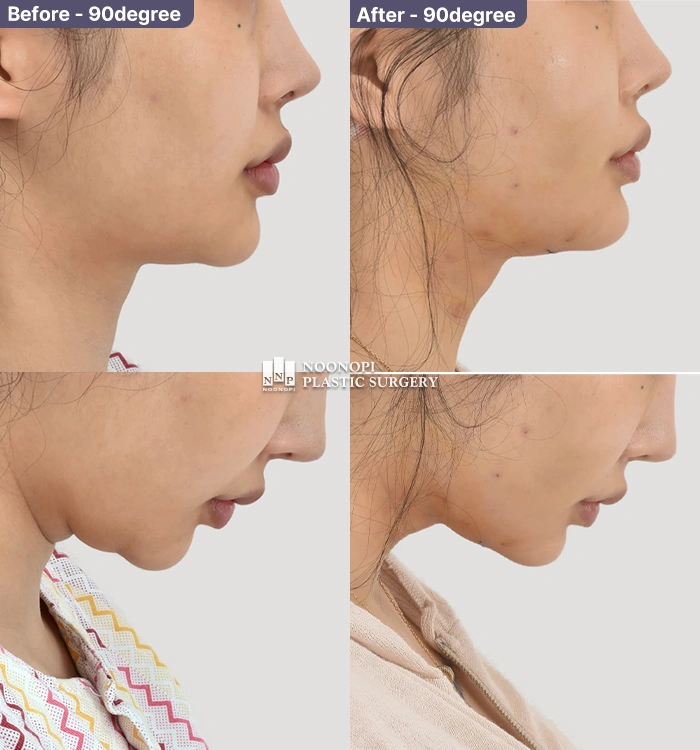
This is one of the most frequent questions I hear during consultations. If you have virtually no skin laxity, double chin liposuction alone can certainly deliver great results.
However, seeing someone else succeed with liposuction does not guarantee the same outcome for you. The underlying cause of a double chin varies widely—ranging from simple subcutaneous fat to congenitally large, ptotic submandibular glands or lax digastric and platysma muscles. When the root cause lies in the muscles or glands, liposuction will not solve the issue even in your 20s, making a surgical neck lift the most definitive solution.
Is a Deep Neck Surgery Safe?
Because a surgical neck lift involves deep fat removal and submandibular gland reduction near critical blood vessels and facial nerve branches, anatomical precision is paramount. In the hands of a surgeon with deep expertise in neck anatomy, the procedure is performed safely and predictably.
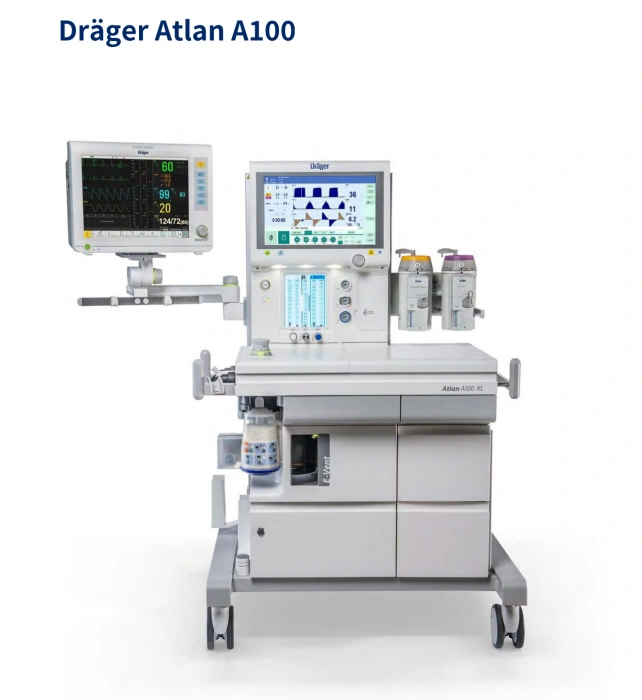
At Noonopi Plastic Surgery, we maintain strict safety protocols to manage any clinical scenario:
- Advanced precision hemostatic instruments and specialized suction systems for clear surgical visualization
- Safe general anesthesia administered and monitored by an in-house board-certified anesthesiologist
- Experienced surgical nursing staff trained to detect and manage early postoperative issues, such as hematomas, within the golden window
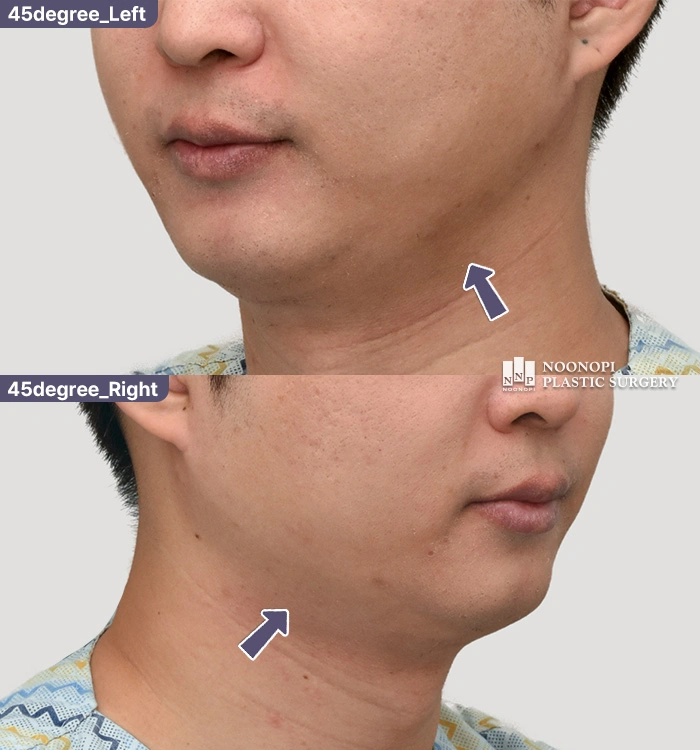
Revision Neck Lift Results: 10 Days Post-Op
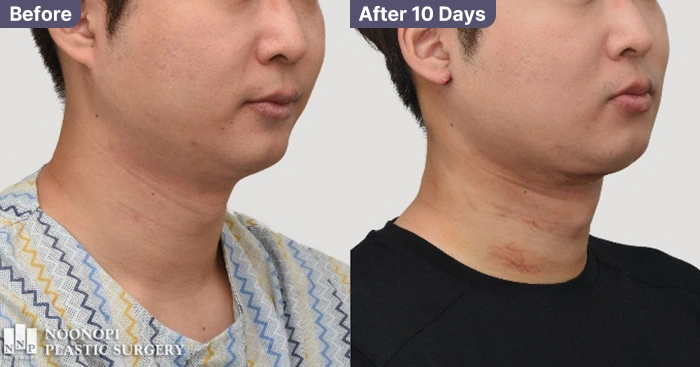
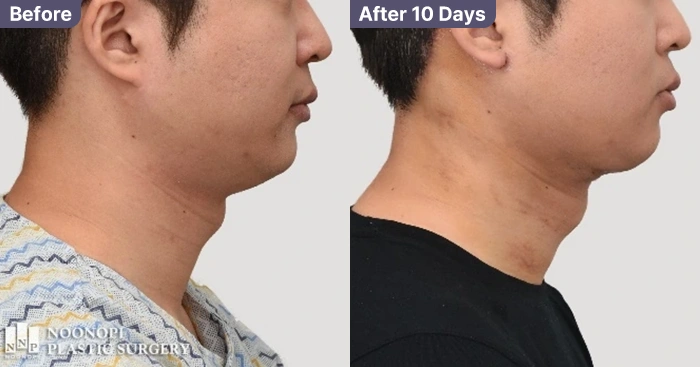
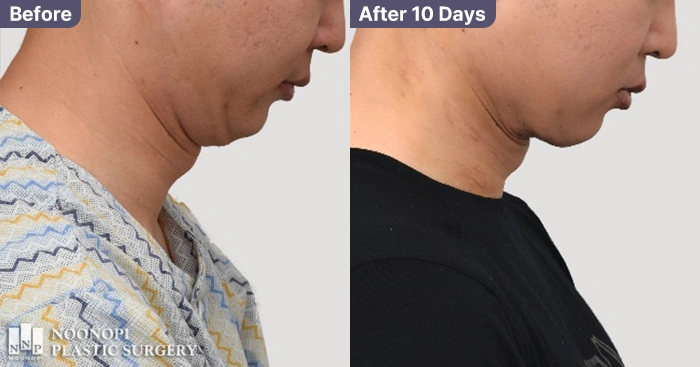
This is the patient's result after meticulously contouring the residual lateral submandibular gland and securely anchoring the deep structures and platysma muscle into their proper anatomical positions. Even at just 10 days post-op with mild residual swelling, the blunt fullness that lingered after their first surgery is gone, revealing a smooth, defined jawline even when looking down.
If you are considering revision surgery after an unsatisfactory double chin procedure, or if you want an accurate diagnosis of what is causing your submental fullness, please feel free to consult with us at Noonopi Plastic Surgery.
Neck Lift FAQ
QWhy does double chin fat removal fail to create a sharp jawline?
Liposuction only removes superficial fat above the muscle. A surgical neck lift is needed when fullness is caused by deep subplatysmal fat, enlarged salivary glands, or loose neck muscles.
QWhat is the recovery time and cost for double chin liposuction vs. a surgical neck lift?
Double chin liposuction takes 1–3 days to return to work and costs 1M–3M KRW. A surgical neck lift requires 5–12 days of downtime and starts at 6M KRW.
QWhat is the key to successful submandibular gland reduction in revision neck lift surgery?
Leaving a balanced amount of gland tissue matters more than how much is removed, especially contouring residual lateral glands often missed in primary surgeries.
QIs a surgical neck lift suitable for patients in their 20s or 30s?
Yes. If a double chin is caused by structurally large salivary glands or lax neck muscles rather than superficial fat, a neck lift is the most effective solution regardless of age.
QWhat is post-operative precautions after neck lift?
For approximately 6 weeks, it is recommended to follow a controlled diet, maintain good posture, and wear a compression garment. Most patients can return to their daily routine within 5 to 12 days; any remaining signs can be concealed using a turtleneck or a scarf.