Fox Eye Lift: Who is a good candidate?
2025-12-11
Noonopi Plastic Surgery · Dr. Nk Park
Fox Eye Lift: Who is a good candidate?
Hello, I am Dr. Park, director of Noonopi Plastic Surgery.
Today, I would like to discuss the Fox Eye Lift, a procedure that has become increasingly popular. Drawing on my clinical experience, I will explain lateral brow ptosis (sagging of the outer eyebrow), which is often difficult to resolve with a standard endoscopic brow lift, and the ideal solutions.
1. The limitations of endoscopic brow lift
In recent trends for middle-aged eye surgery, the endoscopic brow lift plays a versatile role. It is crucial for lifting sagging brows and creating a softer, more youthful appearance.
However, this procedure has clear limitations. While it effectively lifts the central portion of the brow, it is less effective at improving sagging in the lateral portion (the outer tail).
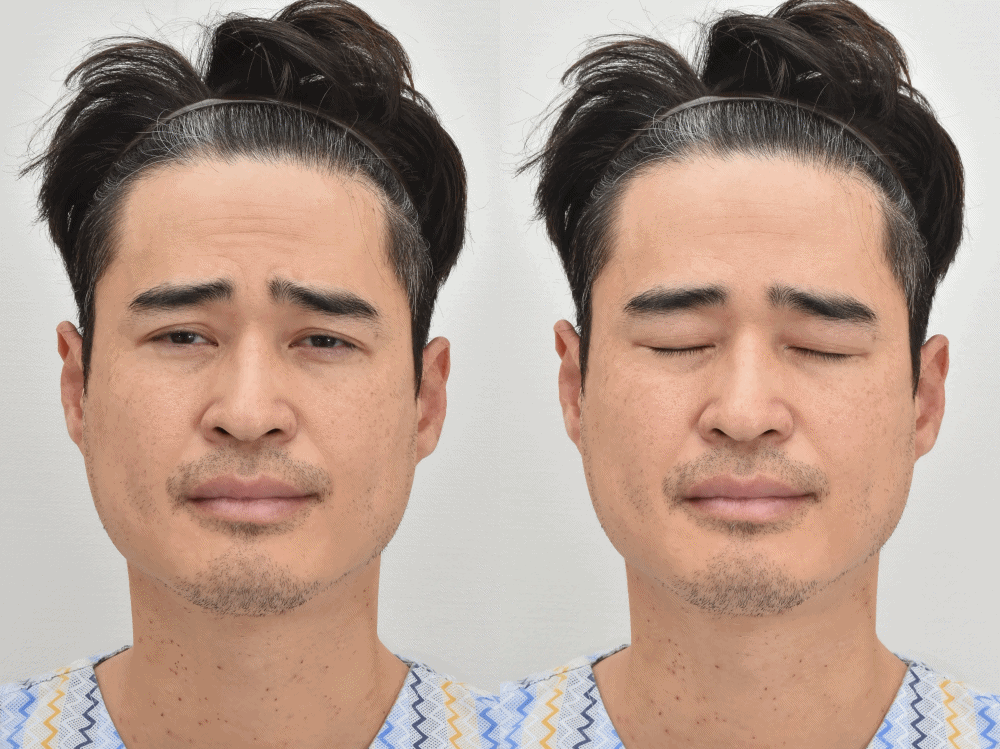
The photos above show the patient with their eyes closed and open. Due to eyelid sagging and congenital habits, the patient appeared to be frowning even when relaxed. An endoscopic brow lift was performed at the Noonopi Clinic.

Although the heavy brows were improved and the patient was satisfied, it can be seen that while the medial brow (inner brow) was lifted significantly, the lateral brow was not lifted to the same extent.
This is an intrinsic limitation of the brow lift technique: the centre lifts easily, but the lateral side is structurally difficult to elevate significantly.
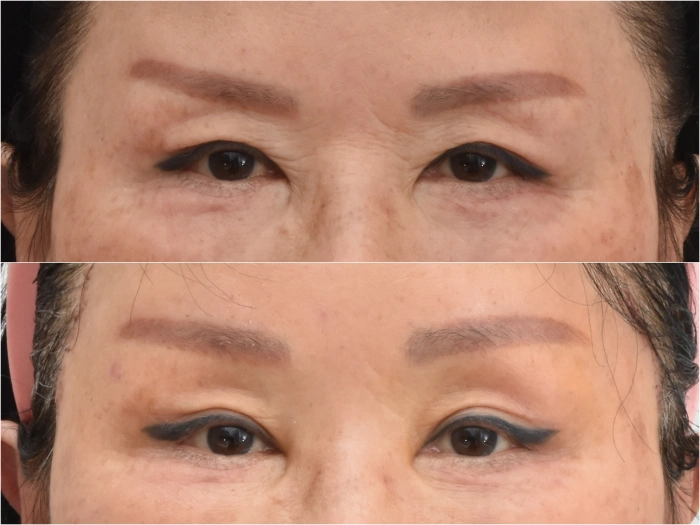
However, if the medial brow is excessively droopy, creating an angry or frowning appearance, a standard endoscopic brow lift alone can achieve satisfactory results (see upper Photo).
However, to achieve the trendy 'cat eye' or 'fox eye' look — a sleek, upward-swept eye shape — a standard endoscopic brow lift alone is often insufficient.
2. Why Asians are good candidates for an endoscopic brow lift
Fortunately, Asian patients tend to prefer a relatively straight (parallel) brow to a high-arched 'gull-wing' brow.
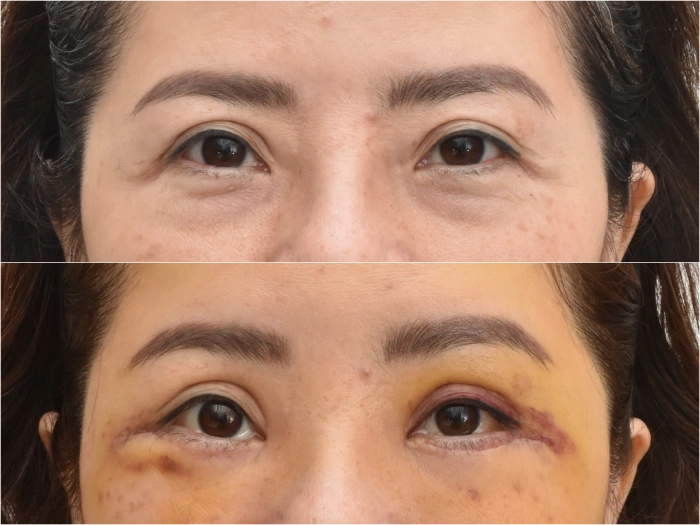
This photo shows the result nine days after an Endotine brow lift combined with lower blepharoplasty.
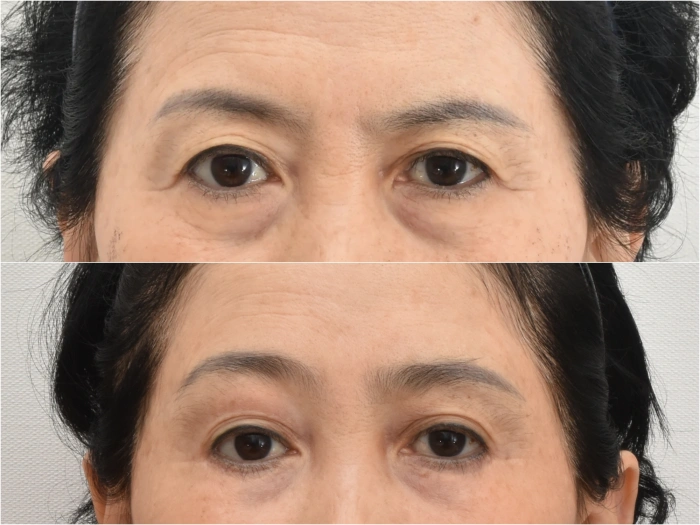
This is the result 21 months after the procedure. In both cases, the natural, youthful look preferred by Asian patients is well maintained.
3. Consideration of Western Preferences in Brow Shape
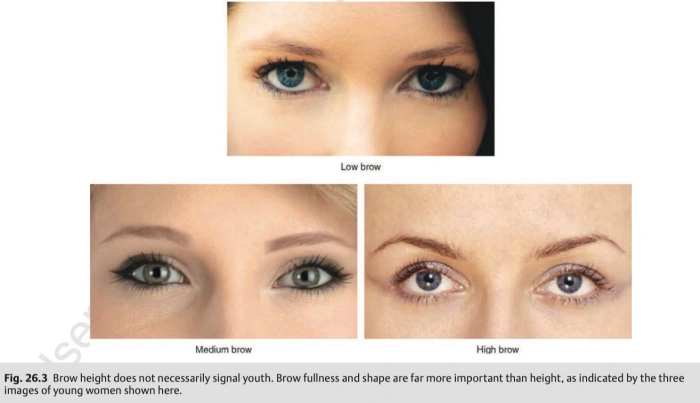
Unlike Asian patients, Western (Caucasian) patients often prefer a brow that is lifted and arched (gull-wing).

This preference is evident in popular Hollywood actresses. To achieve this look, a simple forehead lift is not enough; a temporal brow lift, which focuses on the temples, is essential.
4. Textbook limitations vs. reality of temporal brow lift
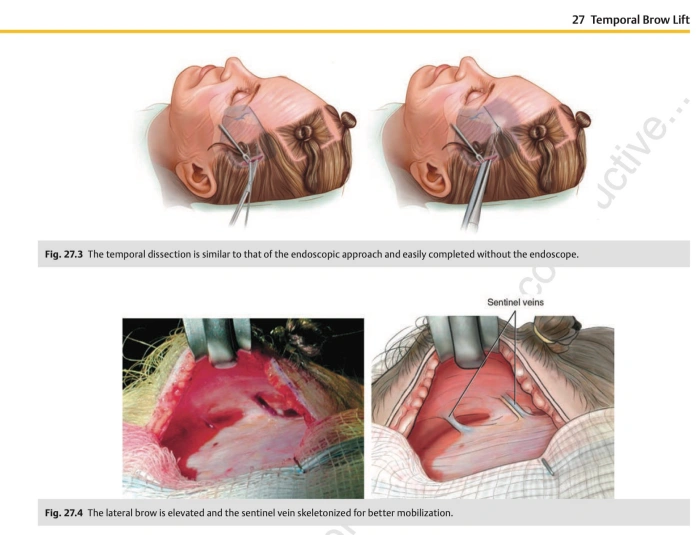
Textbooks typically introduce the temporal brow lift by emphasising the release of temporal ligaments through an incision inside the hairline (scalp).
However, in actual clinical practice, there is a significant gap between theory and reality. Simply releasing the ligaments does not guarantee long-lasting results.
To maintain long-term results, some forehead skin tissue must inevitably be excised. This technique ensures stable lifting results without causing a receding hairline or a wider forehead.
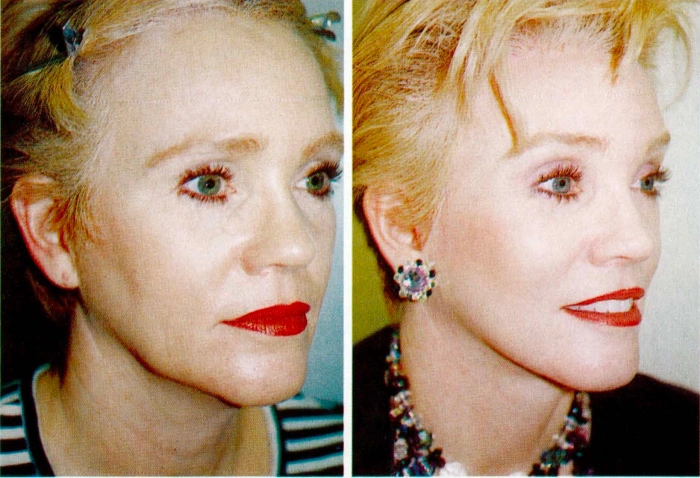
5. Noonopi’s approach to the fox eye lift
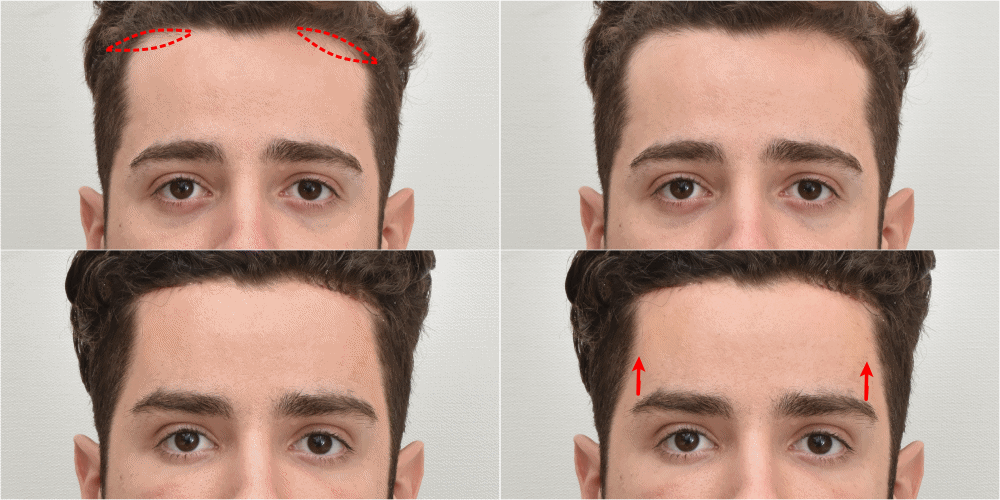
At Noonopi Clinic, we consider ethnicity and gender to be crucial factors when performing the Fox Eye Lift.
For men: An excessive arch is generally not preferred. Therefore, we aim for a shape that subtly combines a parallel look with a slight arch. This creates a natural yet masculine appearance, without looking 'overdone'.
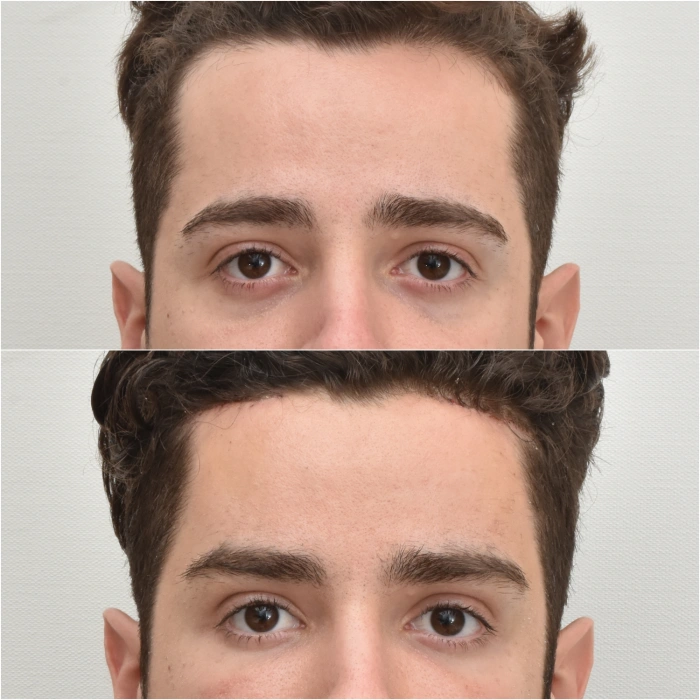
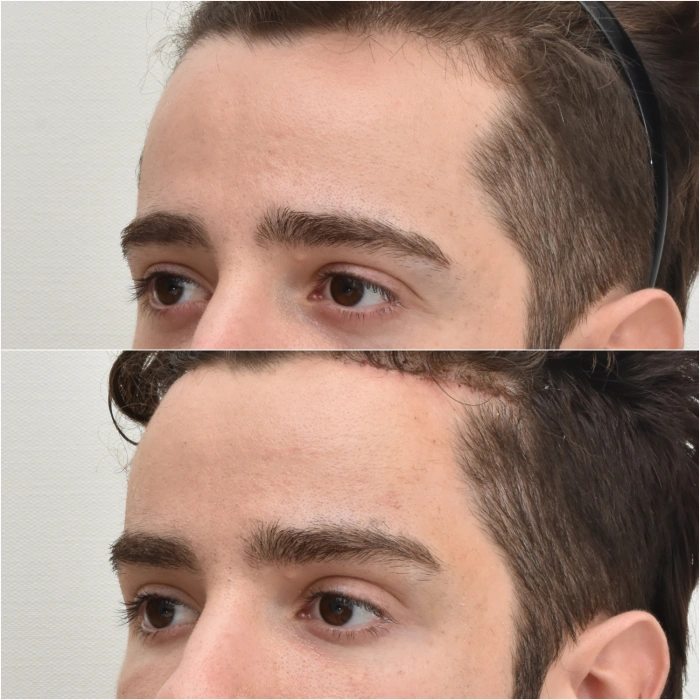
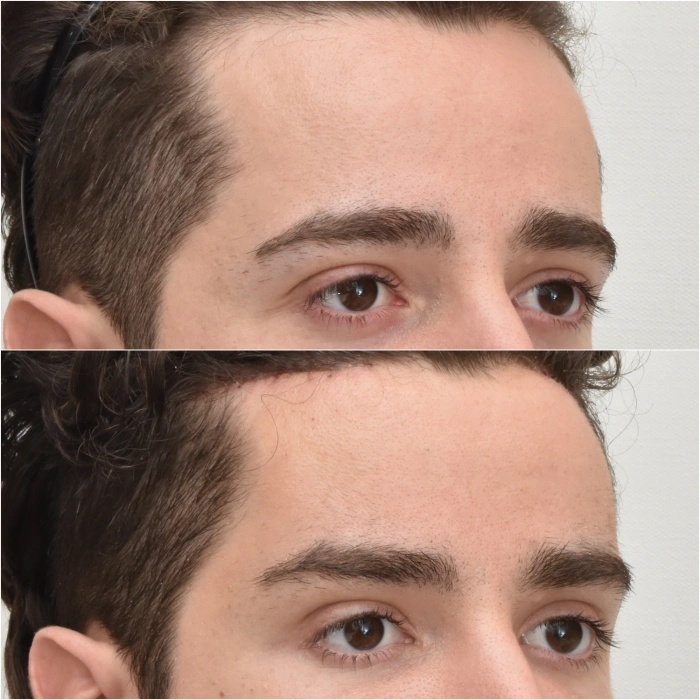
For women: Female patients tend to prefer a more distinctively lifted arched brow. Consequently, the extent of excision and range of dissection may be wider than for male patients.
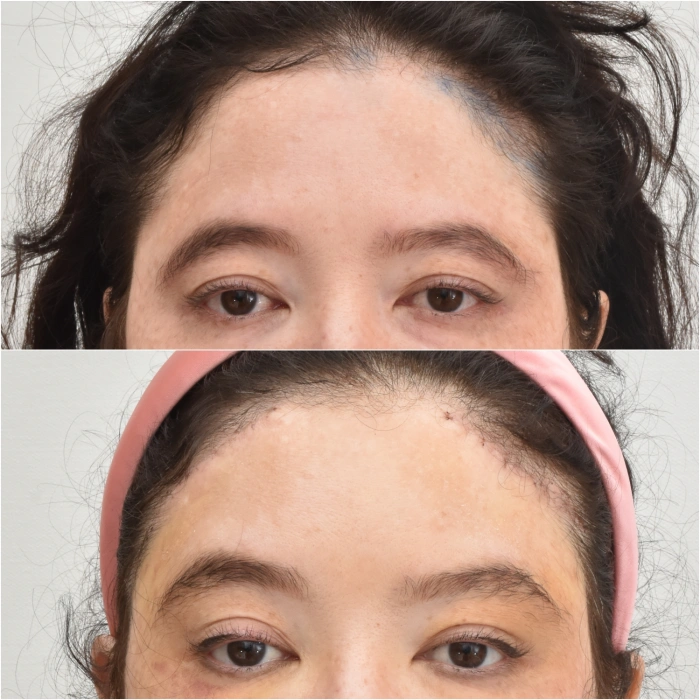
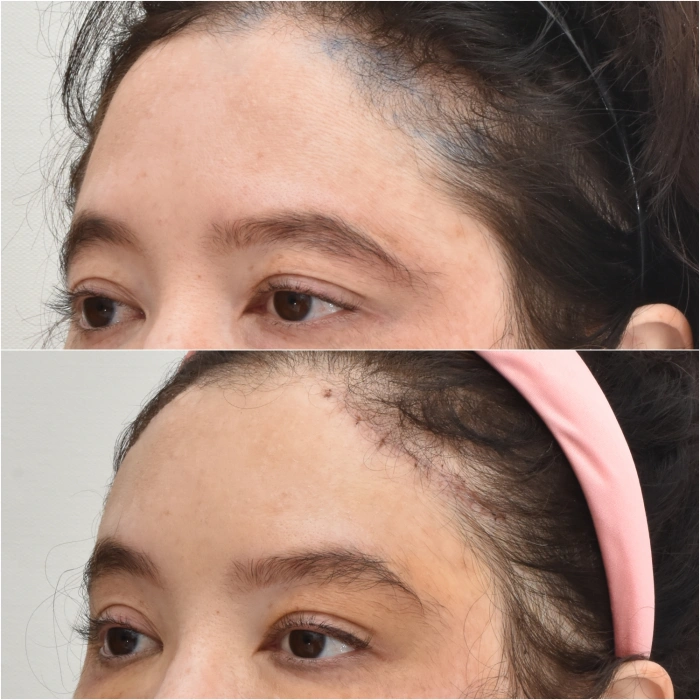
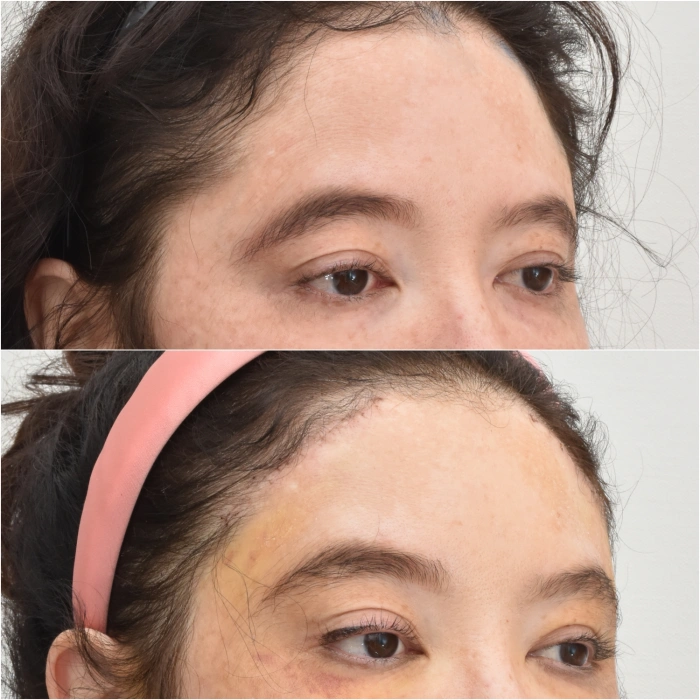
The final brow shape is also affected by the patient's unconscious use of the frontalis (forehead) muscle and congenital facial asymmetry. Surgery alone cannot perfectly correct every asymmetry.
However, surgery to lift the temporal brow is undoubtedly an effective procedure that creates a trendy, sophisticated look for Asian patients and highlights classic beauty for Western patients.
"Fox Eye Lift should be planned with your individual anatomy, goals, and recovery process in mind."
FAQ
Frequently Asked Questions
QHow does a Fox Eye Lift differ from an Endoscopic Brow Lift?
Endoscopic lifts raise the center brow but struggle with the tail. Fox Eye Lifts specifically target the outer brow for a sleek, arched look.
QIs the design different for men and women?
Yes. Men get a subtle, straight-arch hybrid for a masculine look, while women often prefer a distinct, high-arched lift for a trendy style.
QWill this surgery make my forehead look wider?
No. Unlike textbook methods that just pull, we excise specific tissue to lift the brow securely without pushing the hairline back.
Plastic Surgery Expertise You Can Trust
Discover the best version of yourself with Noonopi Clinic. Get a personalized evaluation and safe, natural-looking results from a premier board-certified plastic surgeon in Korea.

Individual results may vary.
All medical procedures carry potential risks, side effects, and complications.
Please consult a qualified medical professional.

- No related posts.