What is a Deep Plane Facelift? The Illusion Between Patients and Surgeons
2026-08-17
Noonopi Plastic Surgery · Dr. Nk Park, Director
Hello, I am Dr. Nk Park, the representative director and board-certified plastic surgeon at Noonopi Plastic Surgery.
During consultations, doctors and patients often use the same terminology, but sometimes they communicate with entirely different understandings of those words. In the field of facial rejuvenation, the most common example of this is the "Deep Plane Facelift."
I wrote this article to share a realization I have gained through years of clinical experience: there is a massive gap between what plastic surgeons mean when they say "deep plane" and what patients believe it means. Furthermore, I want to reveal the 'truth about the deep plane' that patients must understand to ensure clear, effective communication with their surgeons.
💡 The Truth Behind Facelift Marketing
- The Real Meaning of Deep Plane: While patients often misunderstand it as the "newest, deepest, and most effective technique," academically, it refers to a specific surgical method from the 1990s where the skin and SMAS are pulled together as a single layer (composite flap).
- Why is it Trending?: The word "deep" provides a highly intuitive and powerful marketing effect. In reality, many surgeons perform more advanced 'High SMAS' techniques but still use the "Deep Plane" signboard simply to attract patients.
- Noonopi Plastic Surgery's Philosophy: Rather than clinging to trendy buzzwords, we focus on what the patient truly wants: a profound, long-lasting lift through meticulous sub-SMAS dissection, customized to each individual's anatomical vectors.

01
What is a Deep Plane? The Evolution of Facelift Techniques
One of the most frequent questions patients ask when they visit my office is,
"Doctor, do you perform the deep plane facelift here?"
To answer this, we first need to look at what the deep plane is academically and how facelift techniques have evolved.
1) The Lineage of the Deep Plane: From Skoog to Jacono
In the 1970s, the era of "skin-only" facelifts ended with the groundbreaking introduction of lifting the SMAS (muscle fascia) layer by Dr. Tord Skoog.

Yet, Skoog's concept of the SMAS did not gain widespread recognition until Dr. Sam Hamra of the United States embraced it and presented it to the plastic surgery community.

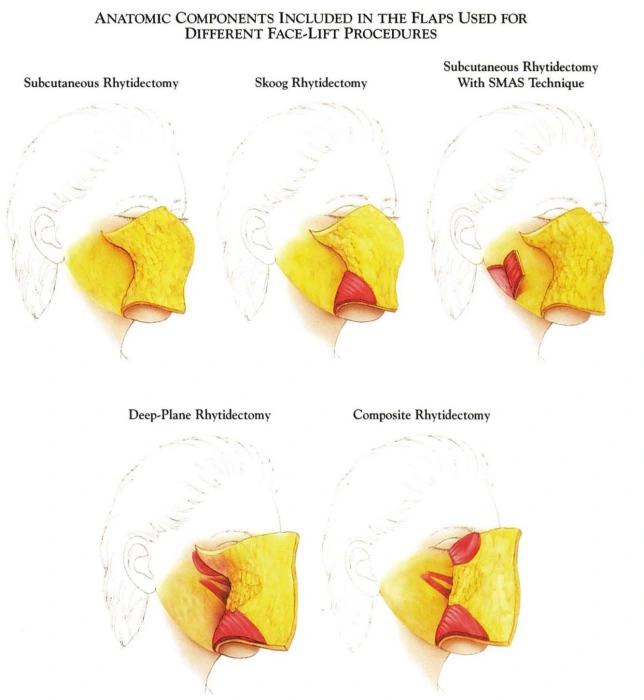

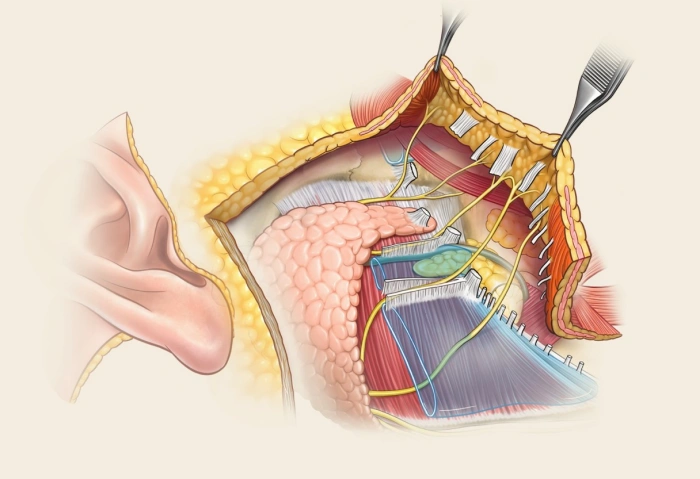
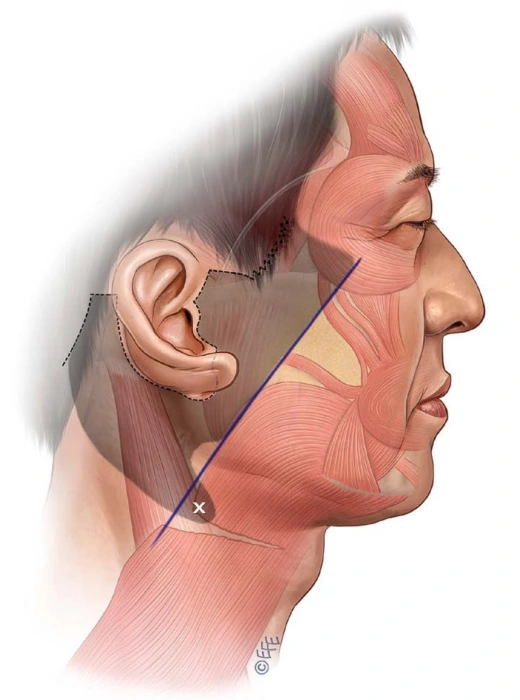
More recently, surgeons like Dr. Andrew Jacono in the U.S. heavily marketed this technique to the public, turning "Deep Plane" into the ultimate global buzzword for patients seeking facial rejuvenation.
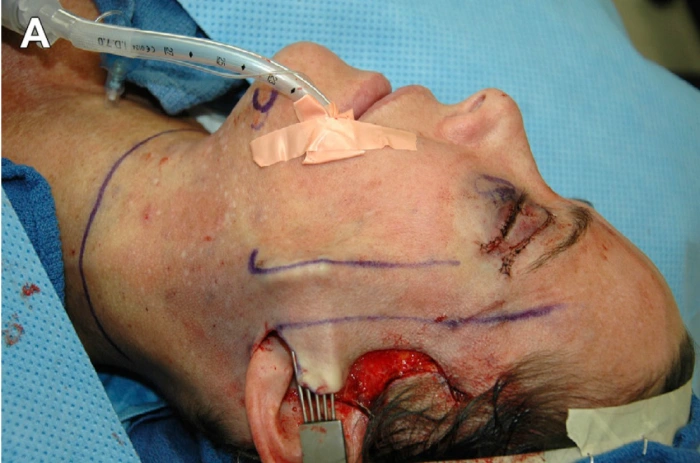
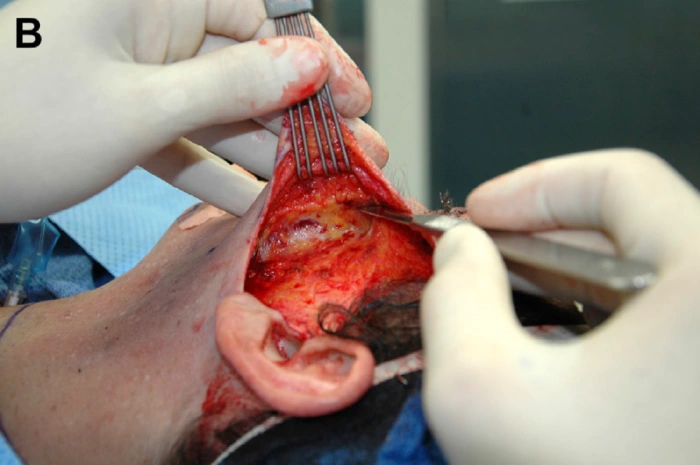
2) High SMAS: The Midface Innovation and its Two Branches
To overcome the original deep plane's inability to lift the midface, a new technique emerged: the High SMAS. By raising the incision and dissection point much higher above the cheekbone, the lifting vector could be directed vertically toward the temples. This was a massive innovation that finally allowed the volume of the front cheeks to be lifted and beautifully restored.
Interestingly, this excellent High SMAS technique is divided into two main approaches.
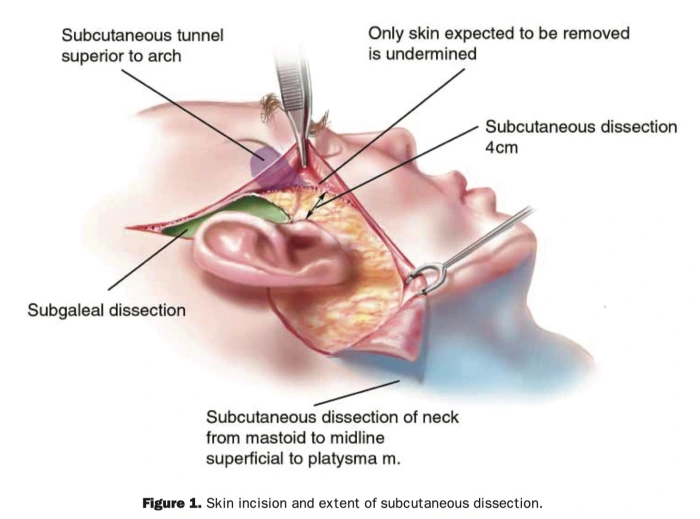
Dr. Barton's Approach
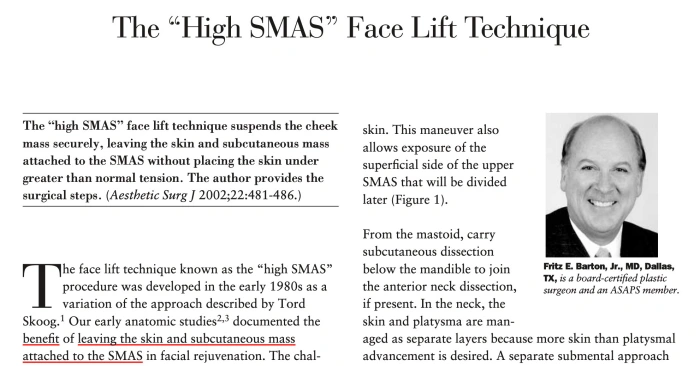
Similar to the deep plane, it holds the skin and SMAS as a single thick layer and lifts them together.
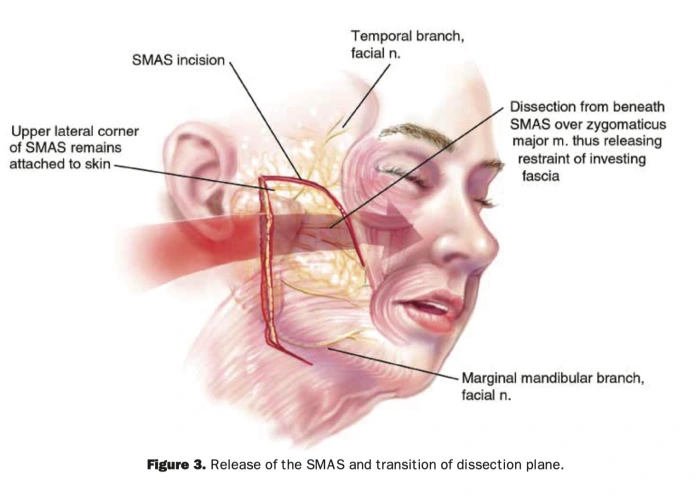
Dr. Connell & Dr. Marten's Approach

This method separates the skin and the SMAS (a Dual-Plane approach), pulling each in its most ideal and natural direction. It prevents the mouth from looking awkwardly pulled and creates a soft, natural, smiling impression. This precise, highly advanced method is what we primarily pursue at Noonopi Plastic Surgery for our high-end facelifts.
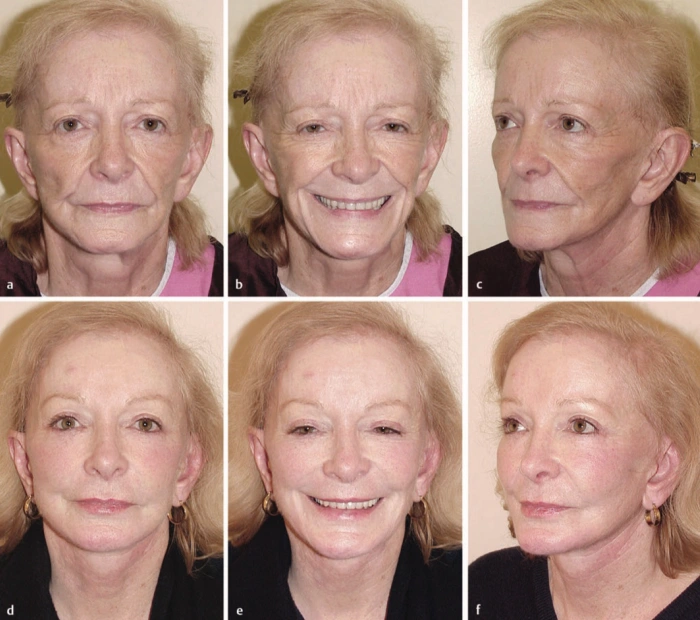
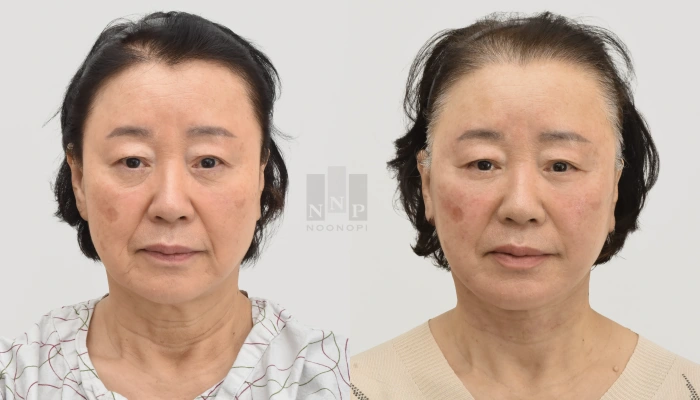
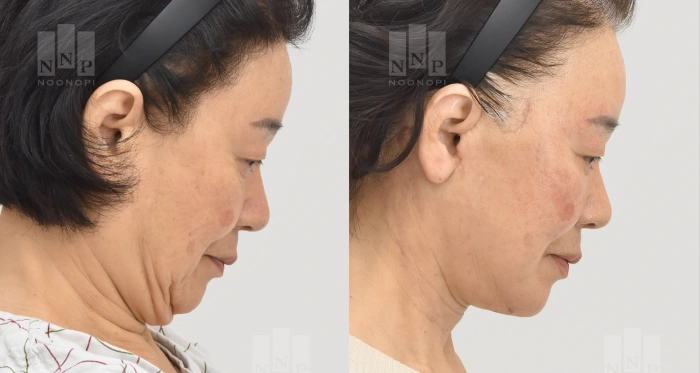
3) Extended SMAS: Dr. Stuzin's Approach


02
Why is "Deep Plane" Trending Now? The Magic of Marketing
If there are more advanced techniques that have overcome the limitations of the early deep plane, why is the term "Deep Plane" currently reigning worldwide as if it were a magical spell?
The short answer is: it is a triumph of marketing.
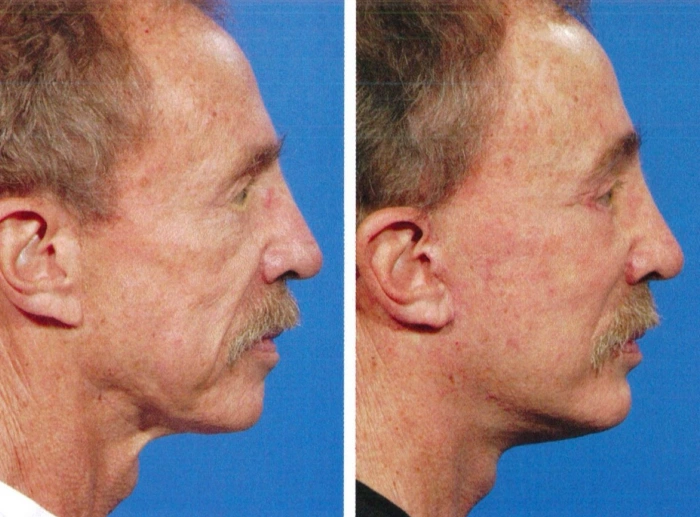
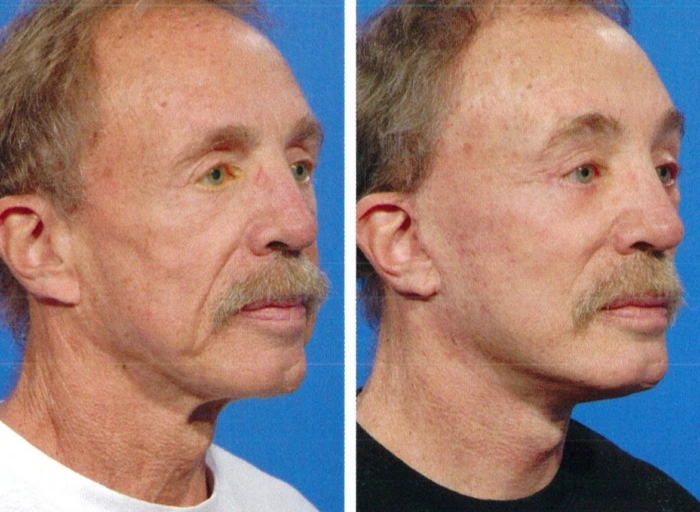
Later, Dr. Bryan Mendelson of Australia carried this legacy forward through landmark papers featuring magnificent, intricate anatomical illustrations.
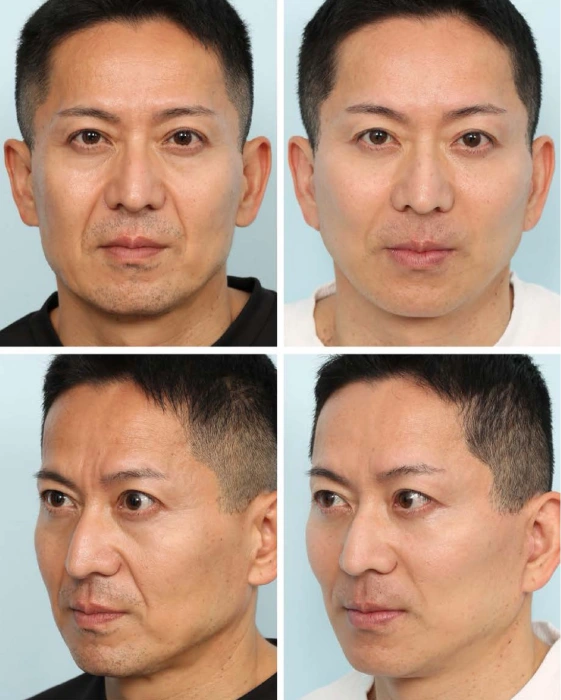
More recently, surgeons like Dr. Andrew Jacono in the U.S. heavily marketed this technique to the public, turning 'deep plane' into virtually synonymous with modern facelifting.
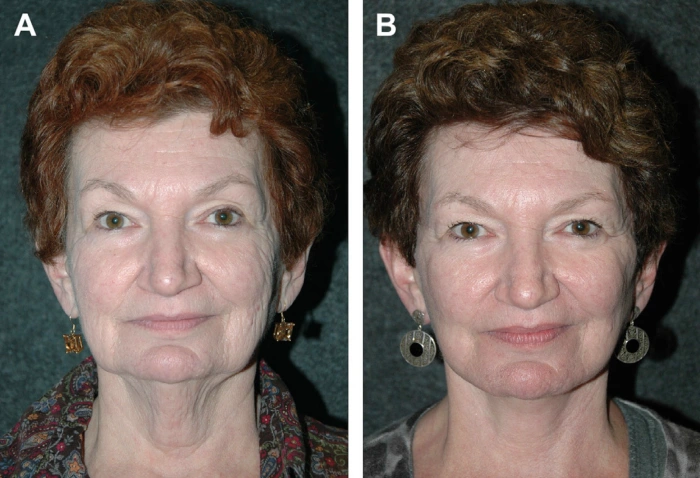
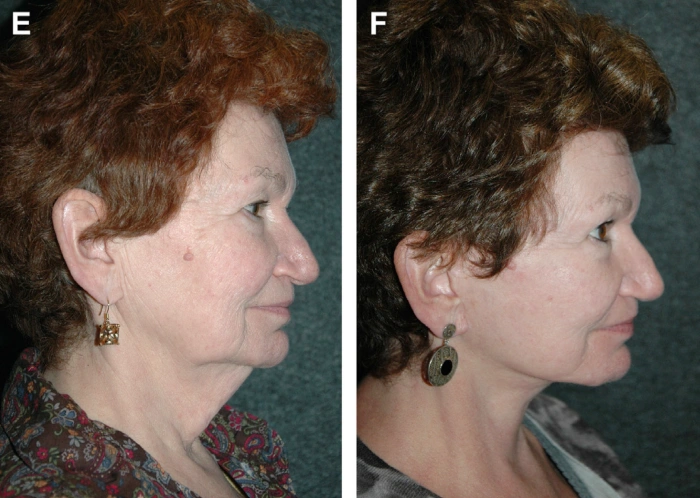
To a patient, the term "Deep Plane" is incredibly alluring. The nuance of the word itself intuitively makes people believe,
"Ah, this must be the latest technology that digs much deeper than others to pull my face up by the roots!"
💡 Pros of the Deep Plane
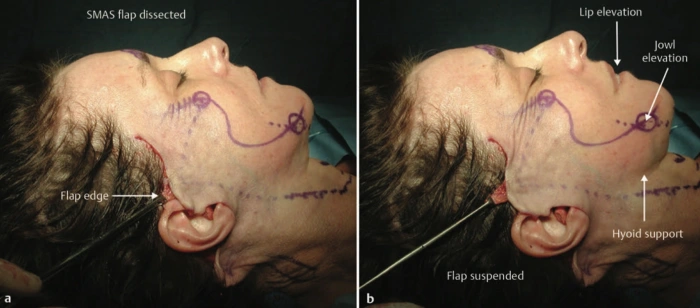
I am not disparaging the deep plane method as mere marketing. The deep plane approach (grabbing the skin and fascia as a single composite layer) has a clear advantage: the surgical process is technically simpler than the dual-plane dissection of Stuzin or Connell. This relieves the surgeon from having to laboriously separate the delicate skin flap from the SMAS.
💡 Cons of the Deep Plane
However, the fatal flaw of the deep plane is that the skin and SMAS must be pulled in the exact same direction. The ideal vector for smoothing the skin and the mechanical vector for lifting the SMAS fascia are entirely different. If you force them together in one pull without separating them, the skin cannot drape naturally, inevitably resulting in bunching, rippling, or an unnatural tension somewhere on the face.
03
Seamless Communication Starts with Accurate Terminology
Truth be told, unless a board-certified plastic surgeon deeply studies and researches facial anatomy, many easily confuse the exact anatomical differences between a Deep Plane, High SMAS, and Extended SMAS.
When I go to academic conferences, I sometimes witness a hilarious yet concerning scene: two doctors passionately debating while using the term "Deep Plane," when in reality, they are talking about two completely different surgical techniques. If even specialists are confused, it is entirely natural for patients—who rely on internet marketing—to misunderstand.
That is why, when I communicate with patients in my consultation room, I do not lecture them using rigid academic standards. Instead, I focus on understanding exactly what "meaning" the patient associates with the term they are using.
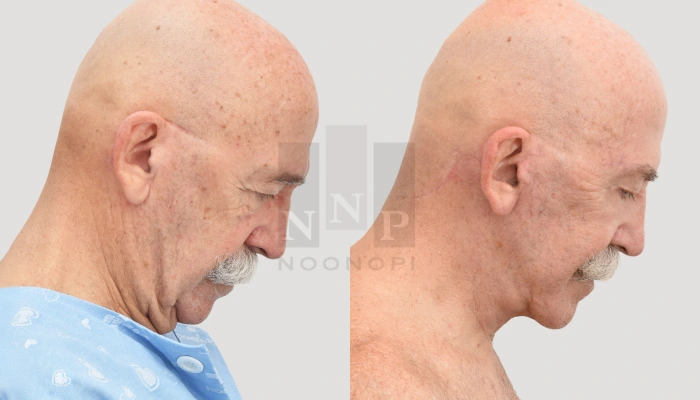
When a patient says to me, "Doctor, please give me a deep plane facelift," I know they are not asking for the difficult "composite flap" described in 1990s medical journals. What the patient truly desires is this:
"Please don't just do a superficial surgery that only pulls the skin. I want you to dissect deeply under the SMAS and lift my face fundamentally and permanently."
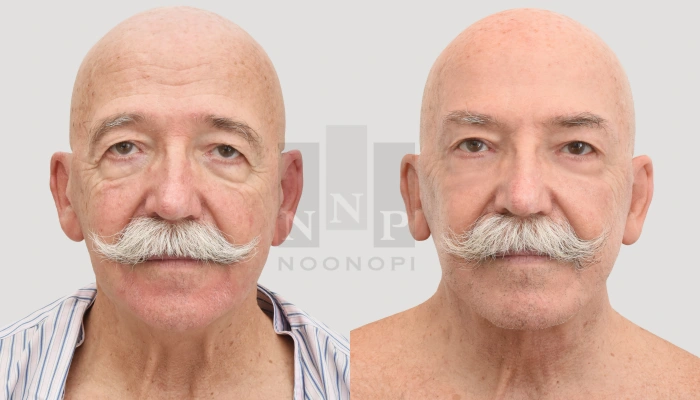
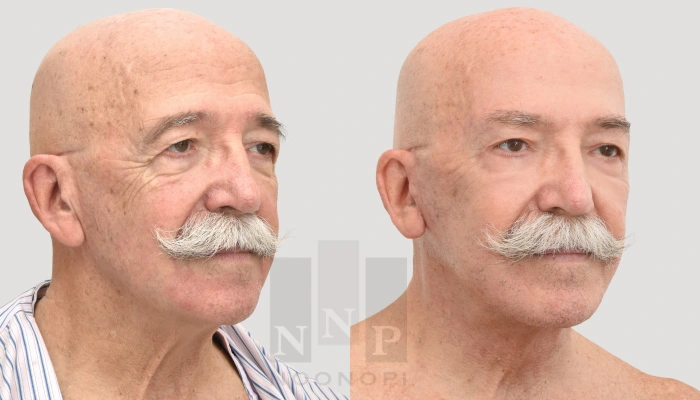
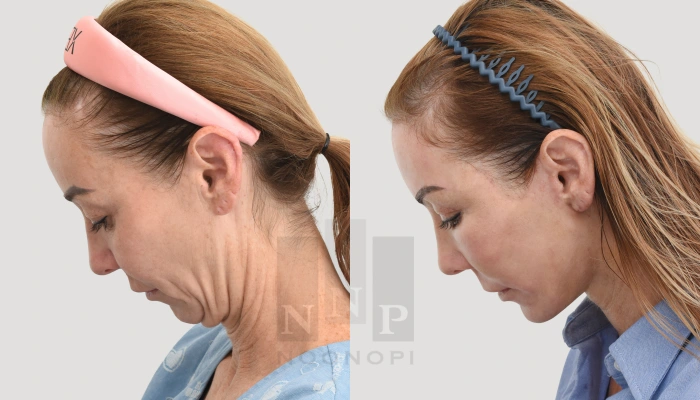
Surgeons and patients sometimes speak different languages using the same words. However, a doctor with a profound philosophy of facial rejuvenation will not get swept up in buzzword marketing. Instead, they will focus entirely on realizing the "deep, fundamental improvement (sub-SMAS dissection)" the patient truly wants, using the safest and most advanced techniques available (like the High SMAS).
04
Conclusion
Are you feeling overwhelmed and confused by the flood of complex medical jargon while considering a facelift?
As a patient preparing for surgery, you do not need to dive into medical journals to study complex techniques and anatomical terms. That is strictly the surgeon's job—to tirelessly research the safest and best method tailored to your unique anatomical characteristics.
Your only job is this: Do not be blinded by flashy marketing buzzwords. Instead, find a trustworthy specialist who can accurately diagnose the root cause of your facial aging and meticulously perform the surgery at the "perfect depth and direction" just for you.
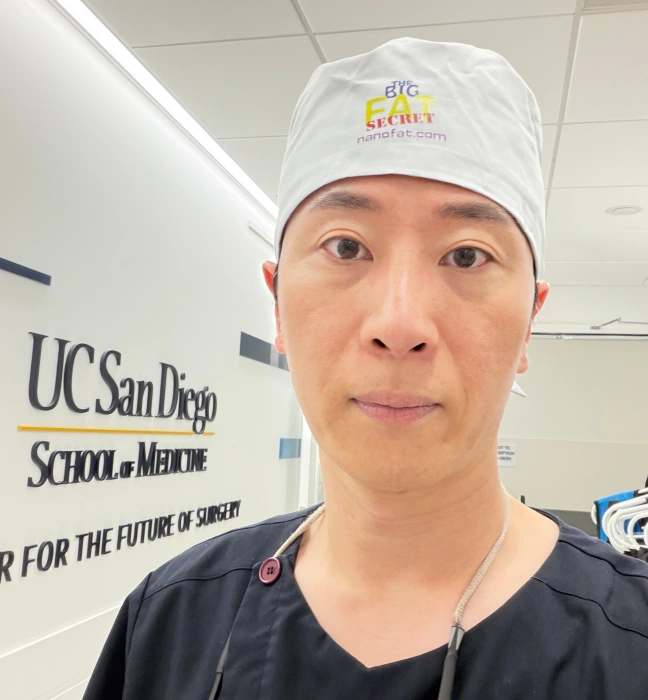
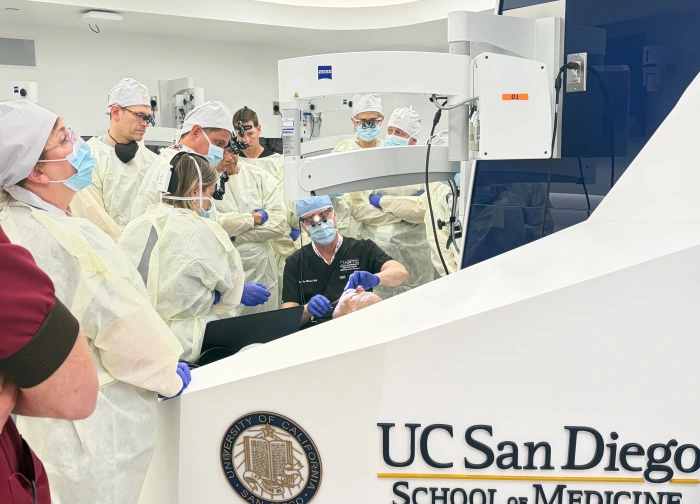
In fact, I started gathering the thoughts for this piece on my flight home from a neck lift conference in San Diego just a few days ago…
At Noonopi Plastic Surgery, we promise to always provide the most honest, accurate, and eye-level consultations.
FAQ
FAQ: Understanding the Deep Plane Facelift
QWhat exactly is a Deep Plane Facelift?
A
It is a technique where the skin and SMAS layer are kept together as a single composite flap and lifted simultaneously without separate dissection.
Q What is the difference between a Deep Plane and a High SMAS facelift?
A
Deep Plane pulls skin and SMAS in one vector, while High SMAS separates them to lift along customized vectors, restoring 3D midface volume.
Q What are the drawbacks of a Deep Plane facelift?
A
Pulling skin and SMAS in the exact same direction can prevent natural skin redraping, causing visible bunching, rippling, or unnatural tension.
Q Why is the term Deep Plane Facelift so popular?
A
TThe word "deep" intuitively implies pulling from structural roots, making it an exceptionally powerful marketing buzzword worldwide.
Q What is the most important factor when choosing a facelift technique?
A
Choosing an experienced surgeon who performs true sub-SMAS dissection tailored to your individual facial anatomy, rather than relying on buzzwords.
Plastic Surgery Expertise You Can Trust
Discover the best version of yourself with Noonopi Clinic. Get a personalized evaluation and safe, natural-looking results from a premier board-certified plastic surgeon in Korea.


- No related posts.